Step through the doorway of San Juan Chamula Church and it can feel as if you’ve crossed into another world. The moment I passed the threshold, everything I thought I knew about a Catholic church was quietly overturned. It wasn’t simply “different” — it felt like the act of entering itself was a kind of crossing.
San Juan Chamula
San Juan Chamula is a mountain village in Chiapas, Mexico, where mist often drifts in and settles over the hills. Most residents speak Tzotzil, a Maya language, and the rhythm of life here continues very much on their own terms.
Mexico is a Catholic country — and it’s home to the Basilica of Our Lady of Guadalupe, one of the most significant Marian shrines in the world. So I never expected to encounter a religious scene like this. Inside the church, people lit candles and prayed with such seriousness that any judgemental word I might have reached for simply dissolved before it could form. What, I wondered, are they asking for so desperately?

The coexistence of Catholicism and Maya traditional ritual
The Catholic Church has long valued doctrinal clarity, so the idea of “blending” with indigenous belief can easily be misunderstood. Yet what I witnessed in Chamula was not a decorative performance or something done lightly. It was a moment where fear, illness, family, livelihood, relationships — the full weight of life — rose up as prayer.
Because the form of that prayer was so unfamiliar, it unsettled me more than I expected. For a moment, it felt as though the foundations of my own faith were shifting beneath my feet. That day, I found myself asking: what have I been calling “faith” all this time?
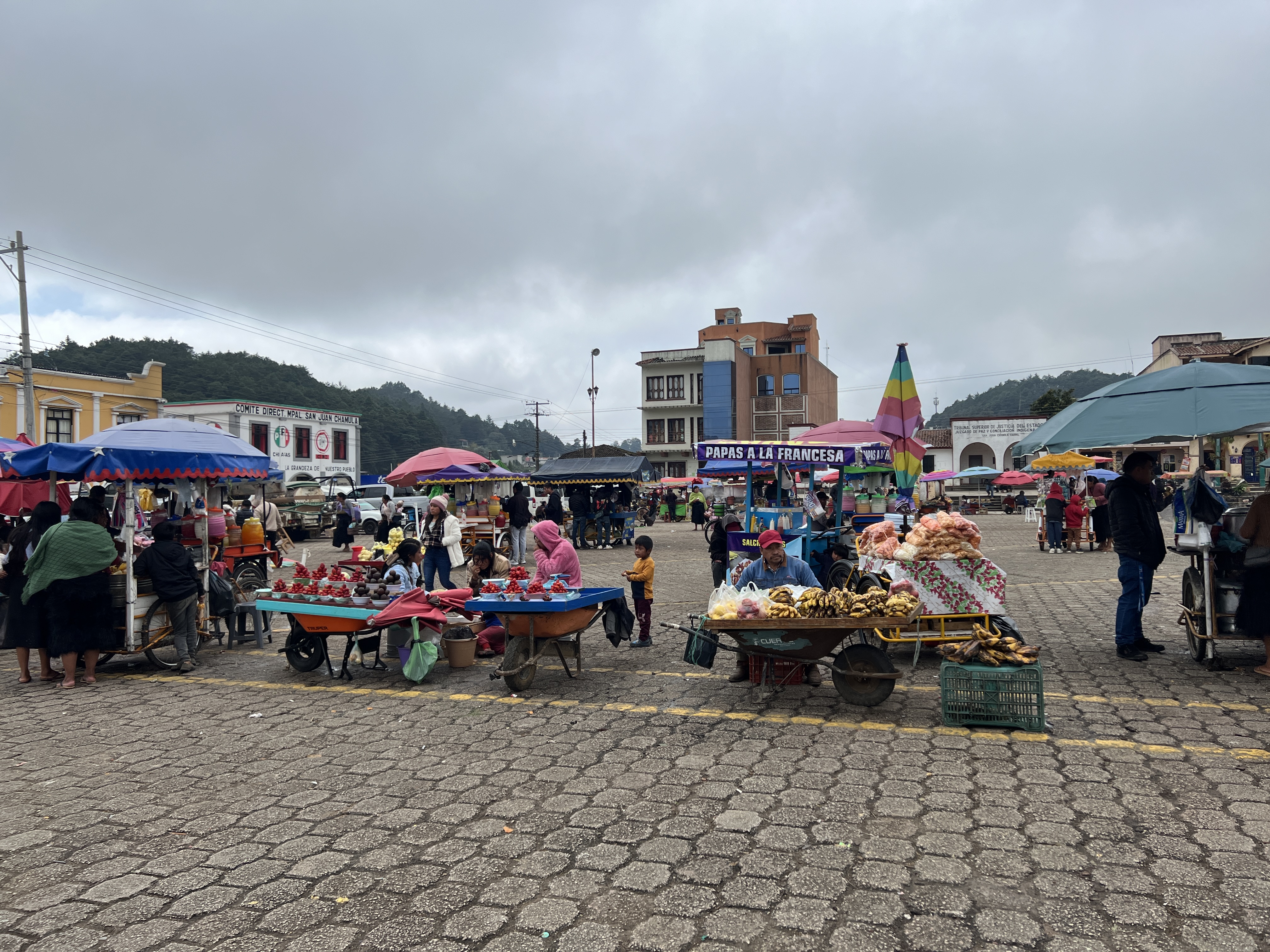
Morning on the way to San Juan Chamula
At 9 a.m., Felix — a Maya driver — arrived at my hotel, along with Gabriela, a German guide. She introduced herself as someone who has lived in San Cristóbal de las Casas for more than thirty years, researching Maya language and history. She came from Munich, she said, originally to study the language, and ended up building her life here.
As we drove, she explained local customs and the way people in this region understand the church as a space. I listened with curiosity, half-believing and half-doubting — until we arrived. The moment I stepped into the village, I felt it: as if I’d entered a completely different world. I couldn’t quite believe such a world was still so vividly alive.
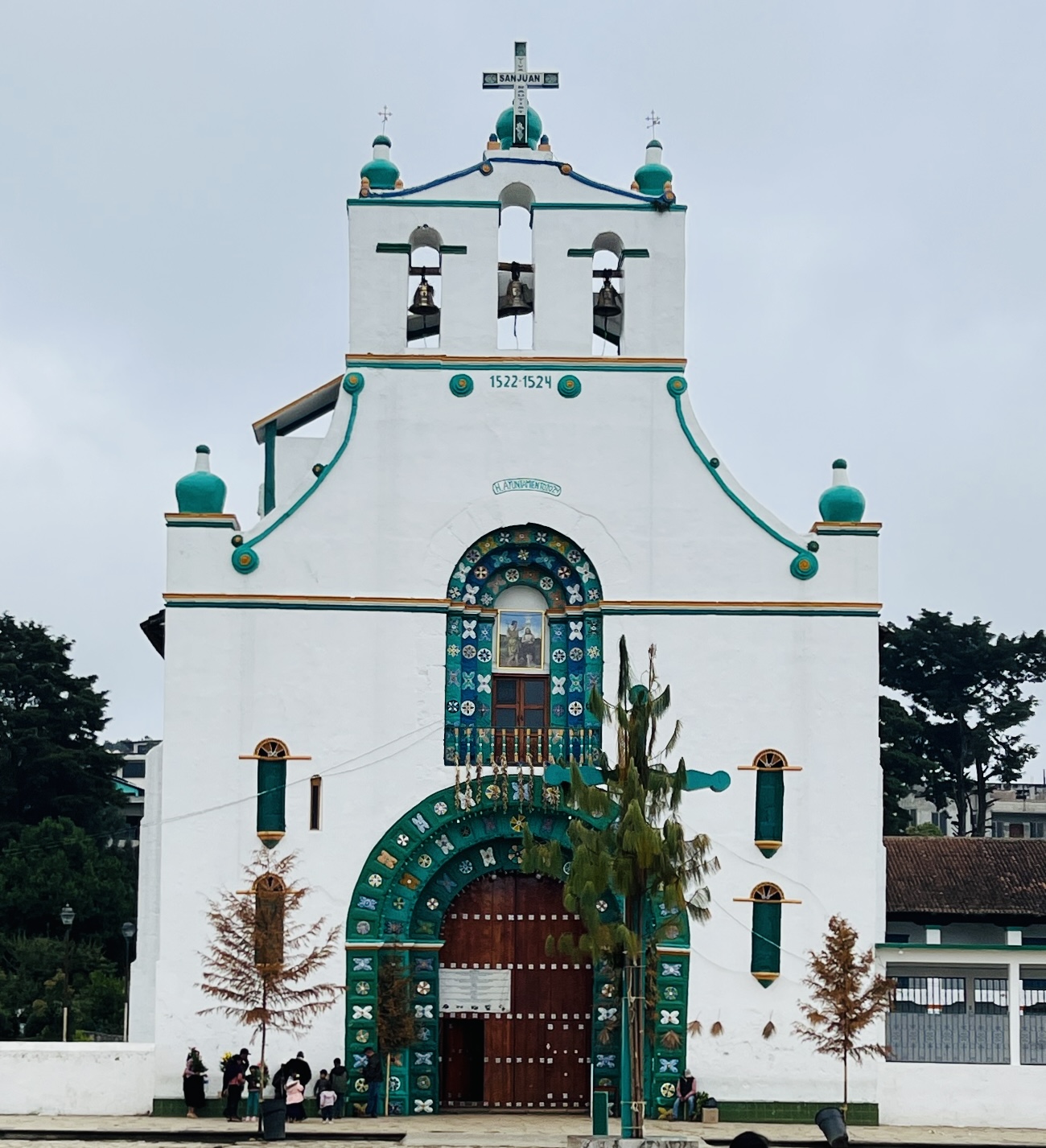
A white church painted with flowers
Walking through the village, one building drew my eyes immediately. “This is San Juan Chamula Church,” Gabriela said.
The exterior walls were a bright, almost dazzling white, sharply contrasted by dark green trim around the windows and decorative details. Across the front façade were colourful floral patterns, so striking they caught your attention from a distance. Above the main entrance, bells rose up in the tower.
What would it be like inside?
The start of something I couldn’t explain
Then, unexpectedly, Gabriela led me to the church and told me to sit on a bench. I wasn’t tired, so I couldn’t understand why. She lowered herself onto the cold ground in front of me and stared — silently, steadily — for quite a while.
It’s strange how a direct gaze held for too long can unsettle the heart. In that stillness, I had the uncanny sensation that her face was momentarily not quite her own — and at that exact moment, she suddenly took hold of my wrist.
I was startled, and a tension I couldn’t name ran through my body.
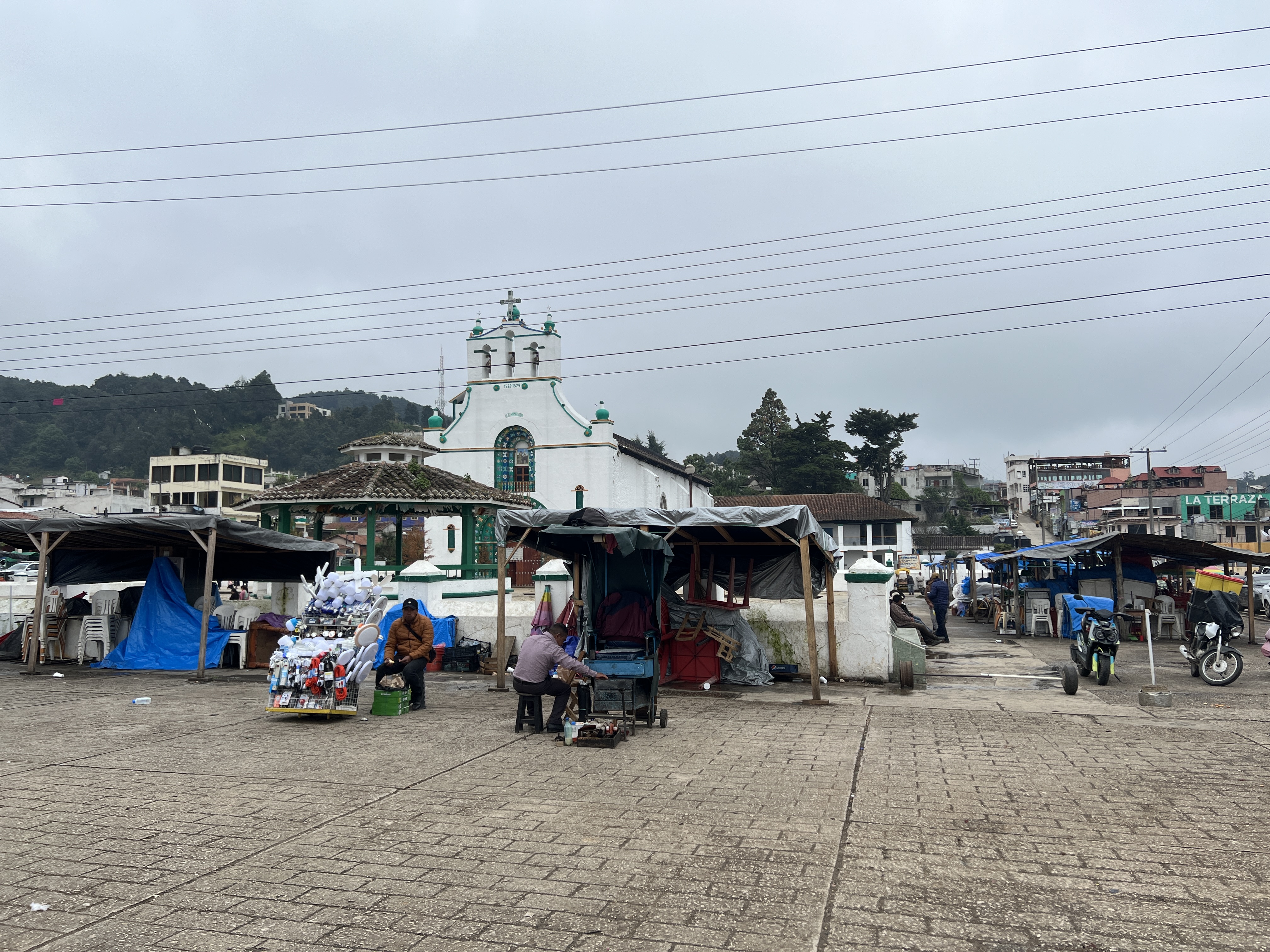
No photography — an absolute rule
Gabriela had already told me not to take photographs in the village, but before we entered the church she repeated it again, firmly. Inside the church, photography was strictly forbidden — and even taking out a phone or camera so that it could be seen was not allowed.
At first, I thought, perhaps she’s simply being very German about rules. I even felt a flicker of irritation — why make such a fuss? Still, I pushed my camera and phone deep into my bag.
But Gabriela’s expression wasn’t theatrical. She said people really had got into serious trouble for trying to take pictures in secret.
When I visited the neighbouring village of Zinacantán, I was trying to take a souvenir photo of the place-name sign, and it seems a local child ended up in my camera frame without me realising. At that moment, Gabriela’s hysterical words and behaviour as she chased the children away made me jump, and the fright I felt then still makes my heart sink even now.
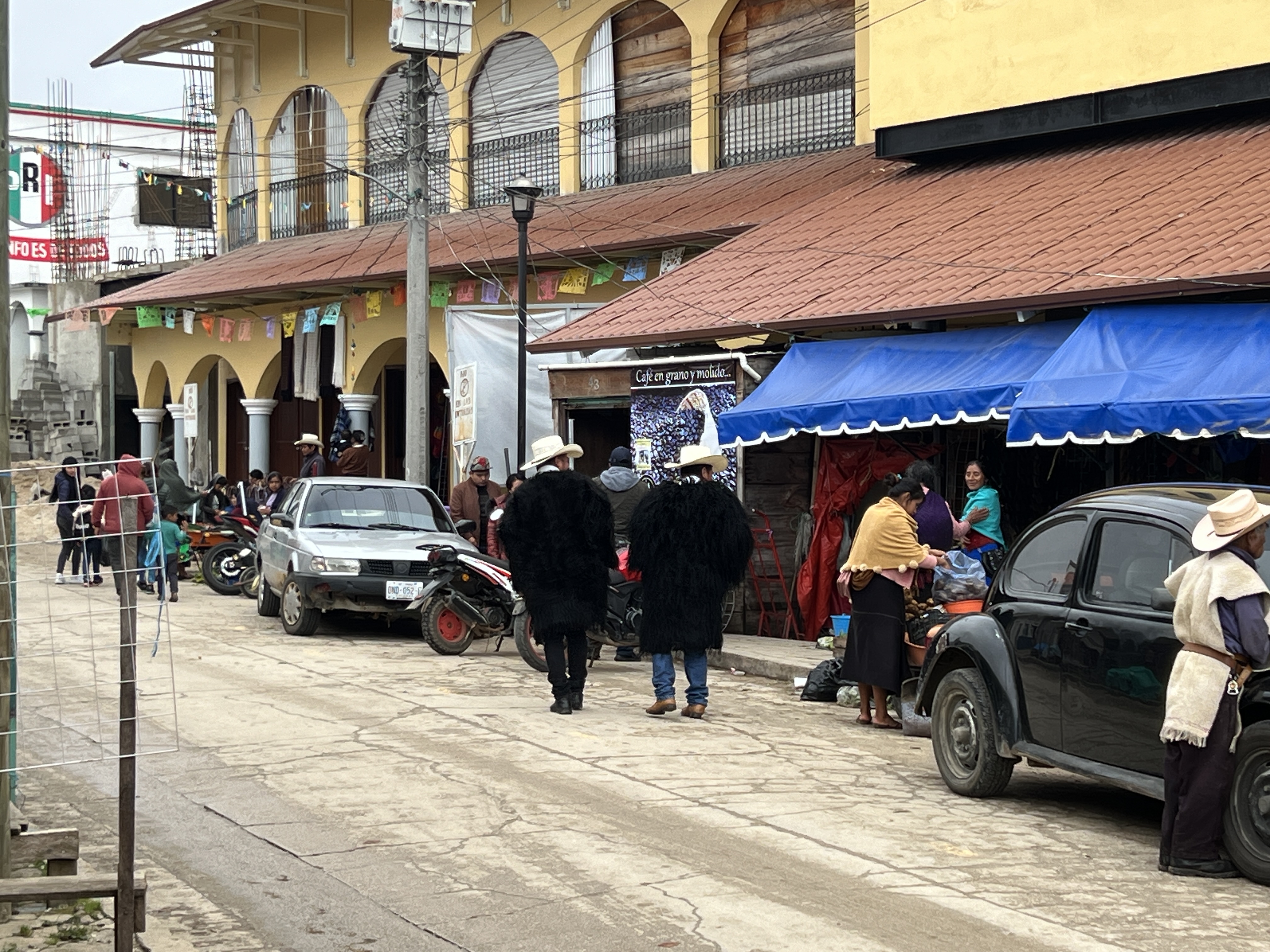
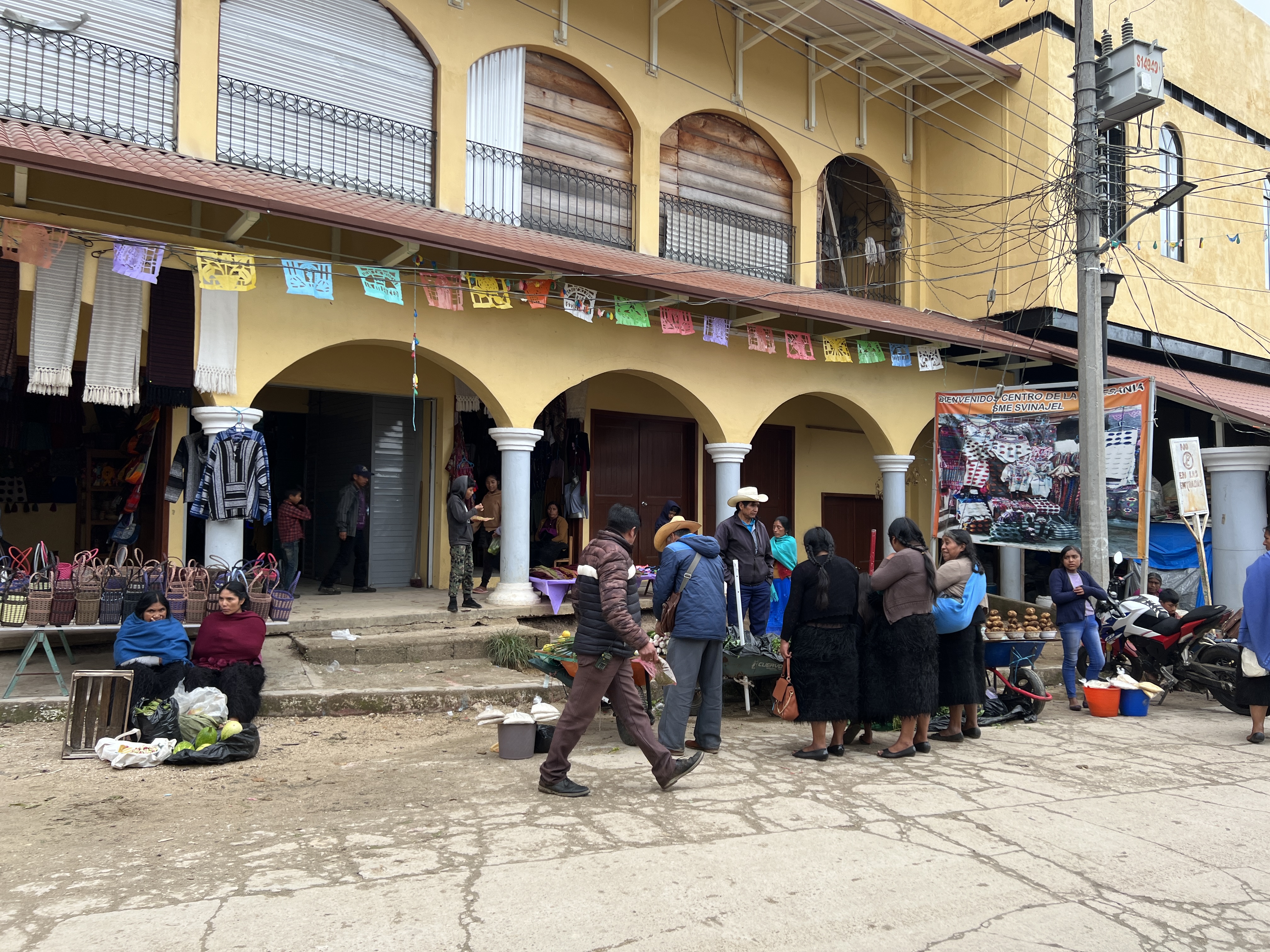
The market opposite the church
Opposite the church, a small market was in full swing — a place where the village’s atmosphere and the movements of the Maya people seemed to surge towards me all at once.
Gabriela added, with a solemn expression, that if you broke the rules your camera could be confiscated, and in some cases even damaged. She said some people had had to pay a hefty fine to get their cameras back, and that if things escalated, there could even be a short period of detention.
Hearing that, I realised this church wasn’t simply a “tourist attraction”. It stood on a boundary the village felt it needed to protect. I became more cautious — and, at the same time, even more curious.
Why is it that people here live at a distance from the outside world, yet fear being captured on camera so deeply?
The atmosphere inside: pine needles and smoke
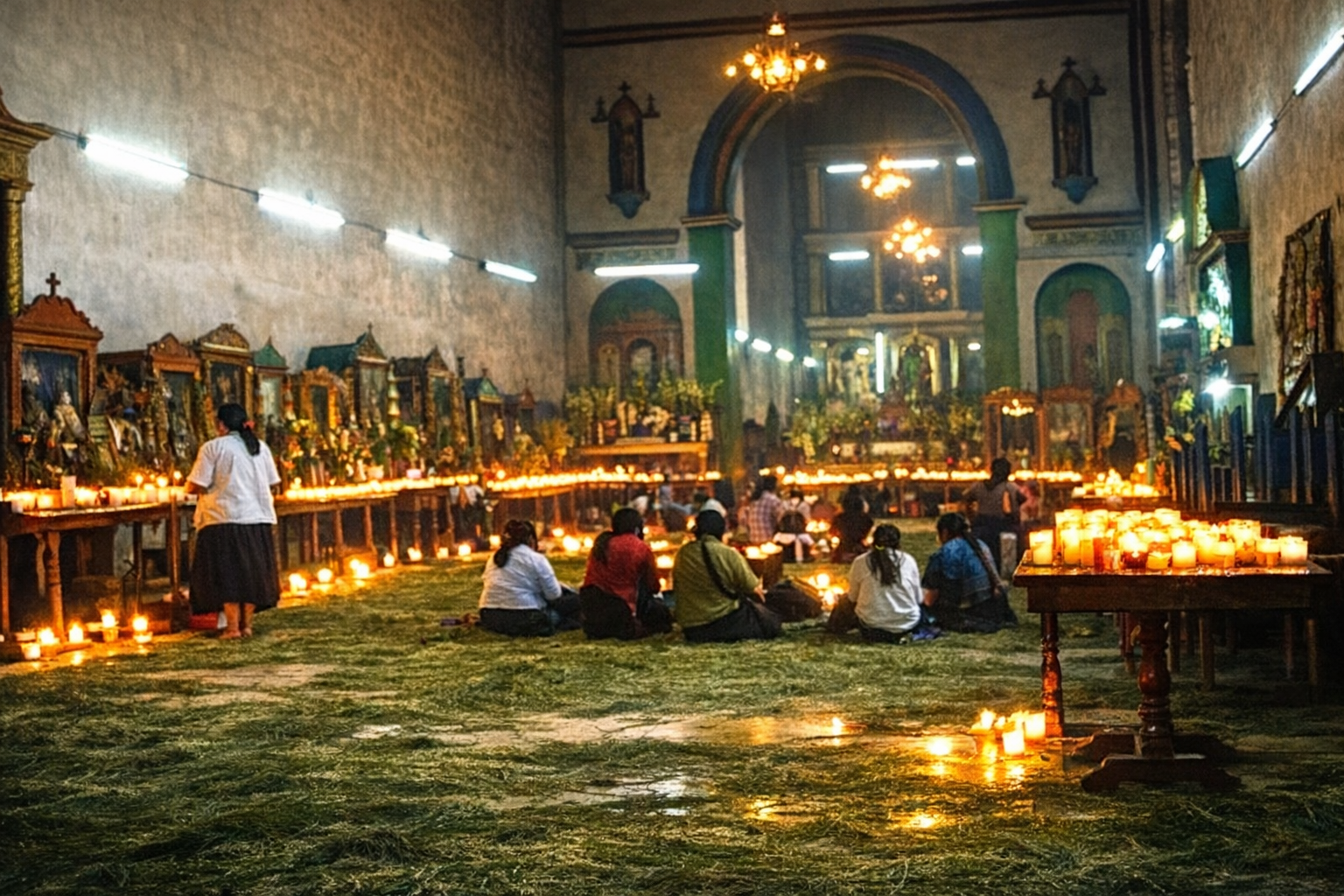
The first thing I noticed inside was the absence of pews. Instead, the entire floor was covered in pine needles, and thousands of candles were planted among them like scattered stars.
Candles covered every usable surface: the altar, the tables, ledges — anywhere a candle could stand, one did. The light wasn’t bright so much as low and breathing, and the smoke from burning copal resin drifted upwards, slowly filling the interior.
Smoke and candlelight overlapped until the space felt strangely unmoored from ordinary reality — a church, and yet not the church I knew.
A low chant in Tzotzil
As I looked around in awe, I began to hear a soft, low murmur. Gabriela leaned in and told me it was a chant sung in Tzotzil, the local Maya language.
It wasn’t Latin hymnody, and it wasn’t a Spanish Mass. The ancient language, resonating low in the air, made the space feel deeper, stranger, and more enveloping — as though I were standing inside the heart of a ritual rather than merely “visiting” a building.
Saints holding mirrors
Along the walls stood many statues of saints. Their clothing looked familiar in a Catholic sense — and yet most of them held mirrors, or had small mirrors hanging at their necks.
Perhaps it was the mirrors, but their faces felt oddly unsettling. And then I saw my own face — faintly reflected — inside a small square mirror. For a moment it felt as if I wasn’t the one looking at the church; it was the church looking back at me. When the saints’ gaze and my own reflection overlapped, I felt a quiet fear I hadn’t anticipated.
Chants and Rituals
This village, I was told, is highly autonomous, with traditions still very much alive in daily life. A church shaped by such a place was bound to feel unlike any Catholic church I had seen before.
I wanted to become, gently, part of the experience rather than only a spectator, so I carefully sat down on the pine-covered floor. When I closed my eyes, the low Tzotzil chant circled around me — faint as murmuring, yet held by a clear rhythm, as if it were stirring the air itself.
At first, it felt deeply strange and unfamiliar. But after a while, I began to sense something else within it: a kind of urgency, and a longing for healing. The chant felt as if it rose like the candle-smoke, slowly lifting from the pine needles into the darkness above.
When I opened my eyes, I saw small groups of Tzotzil Maya praying in traditional clothing. Near many of those groups sat an elderly man dressed in white. Their eyes were closed as they continued chanting, and some people swayed gently back and forth, as if drawn into a deep concentration.
Around the groups were bottles of cola, some still sealed, some open. And then, in one place, I noticed a living chicken inside a black plastic bag — its head and feathers sticking up.
A memory surfaced: I had once heard that offerings might still be part of rituals here. Not anything like the human sacrifices associated with the distant past, but — at least from what I was seeing — a chicken might be used instead. I lowered my breathing and tried not to force an easy conclusion onto a scene I did not fully understand.
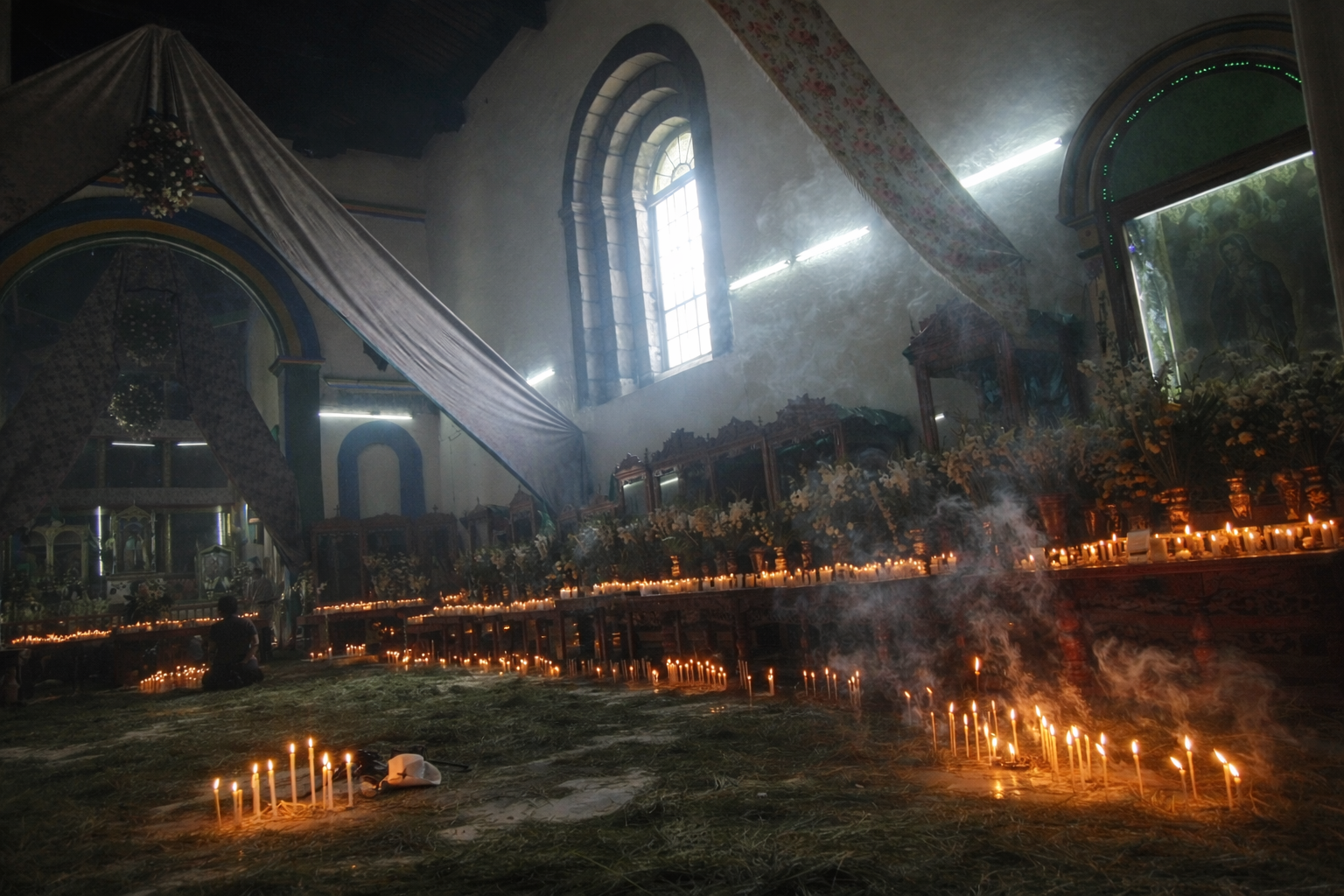
Sacrifice
It seemed that a “sacrifice” ritual could still take place in Chamula. Many people have heard about accounts of human sacrifice in the ancient Maya world, but what Gabriela described — and what I glimpsed — suggested that today, chickens or eggs may be used instead.
She explained a belief that illness or suffering can be “transferred” into a chicken or an egg. What someone might call bad energy, misfortune, or even a persistent illness is thought to move away from the person during the ritual, and into the offering. Once the offering is given, the patient is believed to be released.
Some people spoke of a traditional healer — a curandero — guiding this process.
I tried to hold on to one thing clearly: this is not the same as Catholic teaching on sacrifice or atonement. It felt more like a long-evolving local system of healing and belief, layered into the church space over time. Whatever it was, the faces I saw were intensely serious — as if this were the last language they had left to hold on to life.
Only then did I start to notice the objects on the floor in a new way. Not only the chicken and eggs, but also the bottles placed quietly beside each group — as though they, too, belonged to the ritual.
Coca-Cola and pox
Throughout my travels in Mexico, I often noticed Coca-Cola being treated as something more than an ordinary drink. In Chamula it appeared again: bottles on the floor, and in some cases, bottles filled with a clear liquid.
Gabriela said the clear drink might be pox — a traditional high-strength spirit (often made from maize and sugarcane, sometimes with variations), used in rituals. Some people say it helps them cross from the everyday world into a spiritual one.
Another striking detail was the way Coca-Cola itself can be used within local practice. This does not mean the Catholic Church regards it as holy water — rather, within this community’s ritual logic, it can be given a particular function. I was told that burping after drinking cola is believed to help expel negative energy from the body.
I was surprised, but what stayed with me most was how seriously they held these actions.
And then a question rose naturally: if prayer here is not made only of words, but also of smoke, pine needles, candles, rhythm, movement, and drink — where, in this church, does the Mass belong?
A Catholic church without Mass
Can a church exist without Mass?
Inside Chamula Church there were no pews, and during my time there I saw no priest celebrating Mass. Instead, people sat on the pine needles, lit candles, and prayed — sometimes as families — murmuring softly together.
Gabriela explained that this is not organised like a typical parish where regular Mass is held. She said a bishop may visit occasionally to administer baptisms, but that such visits do not necessarily include the celebration of Mass.
Standing there, I felt the structure was unmistakably Catholic on the outside — and yet the time, the rules, and the spiritual “grammar” inside seemed to follow the village’s own logic. That gap was exactly where I felt most shaken — and most profoundly curious.
Syncretism
What struck me most was this: the church looked Catholic, but it functioned in a way entirely its own.
At first I assumed the many coloured candles were simply visual — but I learned that each colour can be used for a particular intention: healing, protection, a turning point in life, and so on. Gabriela explained that colour can become a kind of “direction” for prayer — and sometimes a sign associated with a particular saint or local spiritual presence.
The many saints’ statues inside the church, too, may not be understood only in the conventional Catholic sense. I was told that some saints overlap in meaning with important figures within local tradition, or can be seen as carrying a similar role. It felt less like a casual mixture and more like a long-established method of coexistence.
I’m cautious about claiming that “Catholicism allowed this” in a neat, one-directional way. What does seem clear is that local people did not easily abandon their own rituals and worldview. Over time, layers formed — belief upon belief — shaping a religious culture that is both seamless and entirely unique.
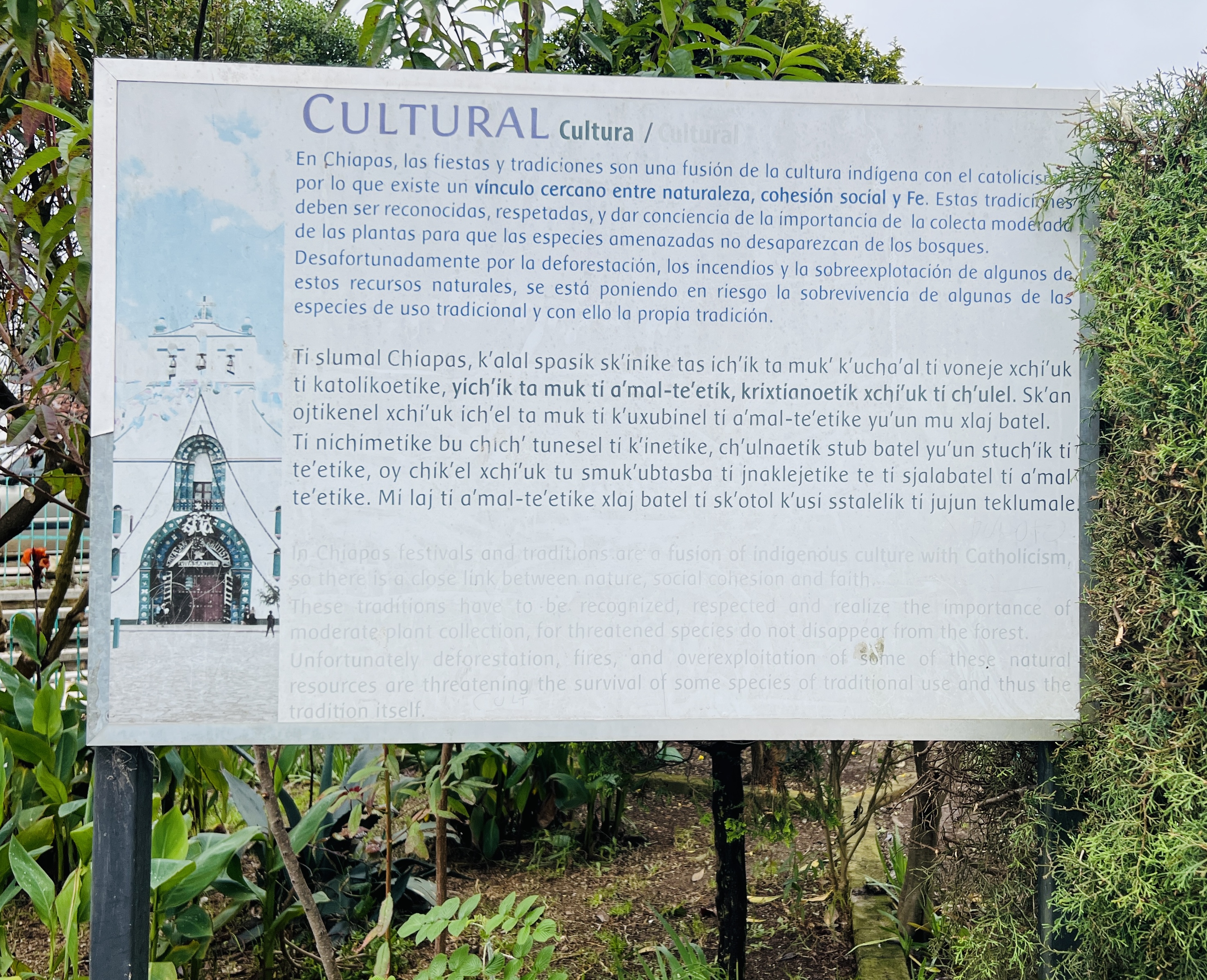
A small shop for ritual supplies, across the square
After leaving the church, if you cross the road from the main square in front of it, there is a small shop that sells what is needed for rituals inside: large quantities of candles, and stacks of pox bottles.
You can also order a small shot there. The phrase I heard repeatedly was muy fuerte — “very strong”. It burned as it went down, yet the finish was unexpectedly smooth.
But as a tourist, drinking it felt different. For someone else, it might be part of an offering, a tool for healing, or a step in a sacred process. For me, it was only an experience — and that difference left me feeling oddly cautious afterwards. In this village, even “drinking” seems to carry a meaning beyond simple consumption.
Closing the tour
Gabriela’s story stayed with me: a woman who arrived three decades ago to study Tzotzil and ended up building her life in San Cristóbal. Her private tour was compelling because of her knowledge, and because she spoke with genuine seriousness.
Her strictness about rules sometimes felt excessive — yet I could sense her respect for the people she lived among. A German woman living close to a Maya community, she seemed to carry real affection for the Tzotzil people.
I asked her carefully whether she believed these rituals actually “worked”. To my surprise, she said yes. She even told me that when she was seriously ill, she took part in a healing ritual involving a chicken — and afterwards, she recovered in a way she still finds difficult to dismiss.
And before we entered the church, when she made me sit on the bench, sat on the ground in front of me, watched me in silence, and then took my wrist — that moment has never quite left me. I still don’t know what it was, or what it meant.
How can such mystery be possible?
The truth is, when the travel agency first suggested visiting the indigenous village of San Juan Chamula, I nearly declined. I wasn’t especially interested — until I thought, why not just go once?
I’m glad I did. Chamula was astonishing. Watching people protect their culture and way of life with such steadiness, I felt a sense of awe. And I found myself thinking: perhaps travel is, in the end, the quiet widening of the boundaries of the world we thought we knew.
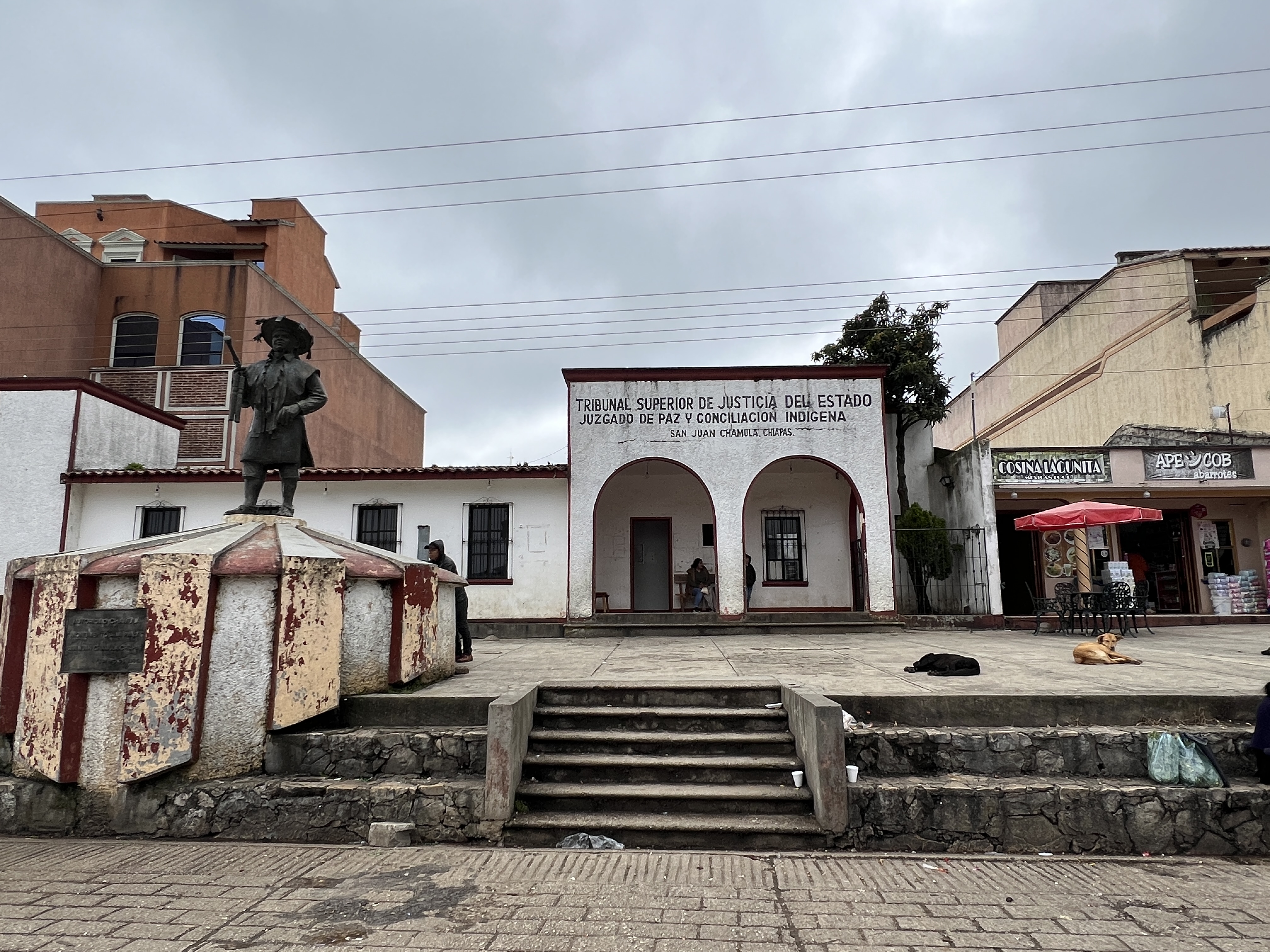
Getting to San Juan Chamula Church from San Cristóbal
From San Cristóbal de las Casas, San Juan Chamula is roughly a 15–20 minute drive. I went by private tour vehicle, but locally it’s also common to take a colectivo (a shared minibus) from around the market area, or to use a taxi for an easy return trip.
On a pilgrimage path towards my mother, now a star
– Little Star
#MexicoTravel #Catholicism #CulturalHeritage #TravelWriting #TravelEssay #SacredPlaces #Pilgrimage #Nomadia83
'성지순례 삼만리 여정 > 교회_Church' 카테고리의 다른 글
| 공중 교회 — 이집트의 가장 오래된 기독교 예배당 (4) | 2026.03.03 |
|---|---|
| Iceland’s Most Beautiful Churches (0) | 2026.03.03 |
| 산 후안 차물라 성당(Chamula) — 가톨릭과 마야 의례가 만나는 곳. (0) | 2026.02.27 |
| Tenerife Island: La Laguna’s Iglesia de la Concepción and Its Bell Tower (0) | 2026.02.25 |
| 테나리페 섬의 라 라구나 콘셉시온 성당과 종탑. (0) | 2026.02.25 |


