This pilgrimage to Assisi was a truly special experience for me. It was no coincidence that I happened to be there on that particular day. The year 2026 marks the 800th anniversary of the death of Saint Francis, and from 22 February to 22 March, during Lent of that very year, the saint’s remains were being exposed for public veneration in the Lower Basilica of the Basilica of Saint Francis in Assisi for the first time in 800 years. Without knowing any of this, I had made a reservation for the veneration of Saint Francis’s remains about two months before setting off on my journey. Only later did I realise that I had already stepped into a historic pilgrimage. The fact that I was there, present at the moment when the remains of Saint Francis were being publicly venerated for the first time in 800 years, felt to me like grace and a miracle.
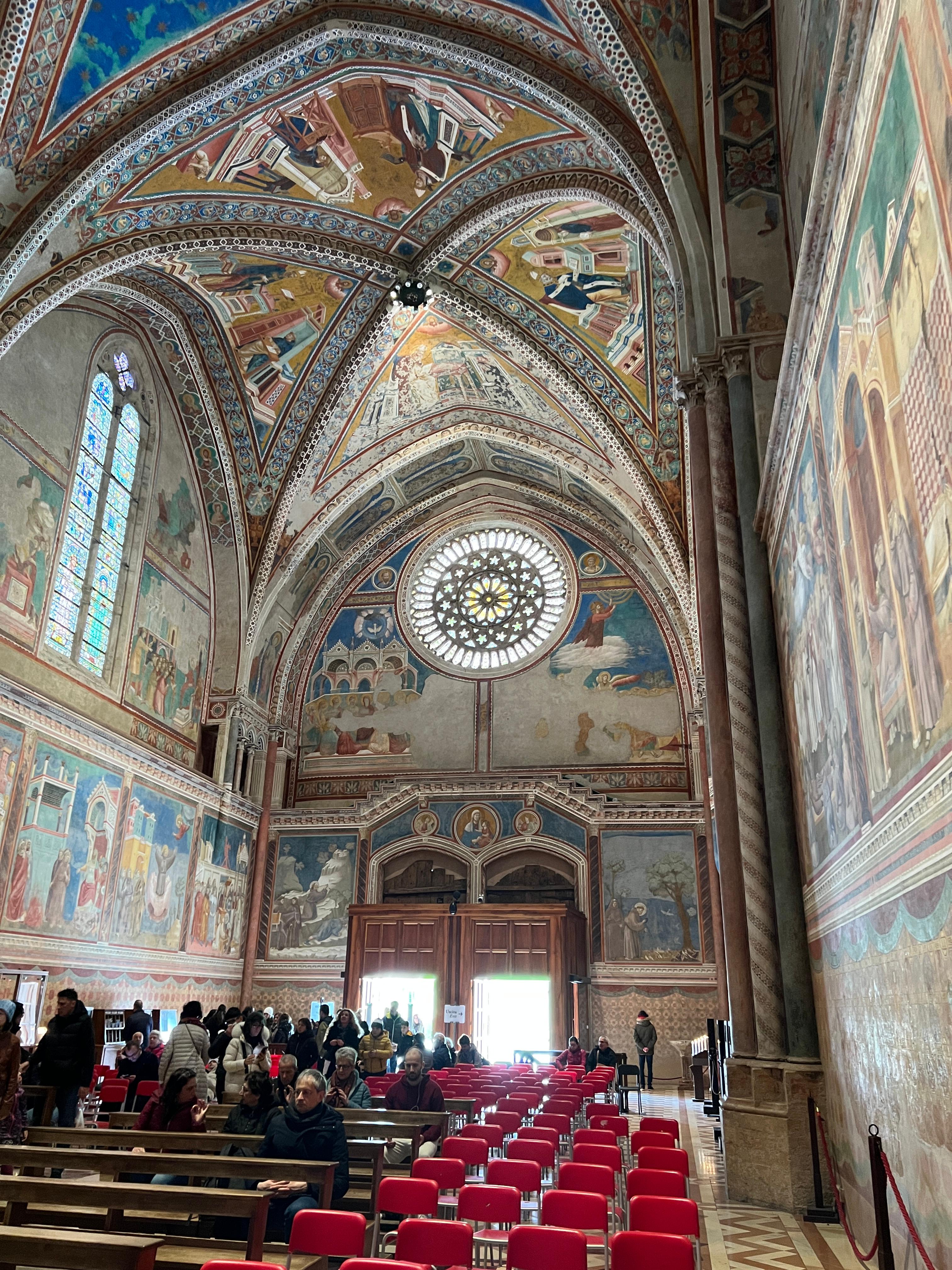
Veneration of the remains for the 800th anniversary of the death of Saint Francis
In truth, whenever I visit a basilica or a great church, I naturally find myself seeking out the lower chapel or crypt where a saint’s tomb is enshrined. This time too, I had made the reservation almost out of habit. Looking back, however, it felt less like a travel habit and more like a small calling that led me into the special time of the 800th anniversary of Saint Francis. During the period of veneration, the saint’s remains were moved from the crypt where his tomb normally lies and placed beneath the papal altar of the Lower Basilica, while all Masses were celebrated in the Upper Basilica. Because I did not realise in advance that a reservation was required in order to attend Mass, I had to leave the Upper Basilica before the liturgy began. My disappointment at that moment was not a small one, yet it left me with the desire to return one day and take part in Mass there.


The Basilica of Saint Francis of Assisi
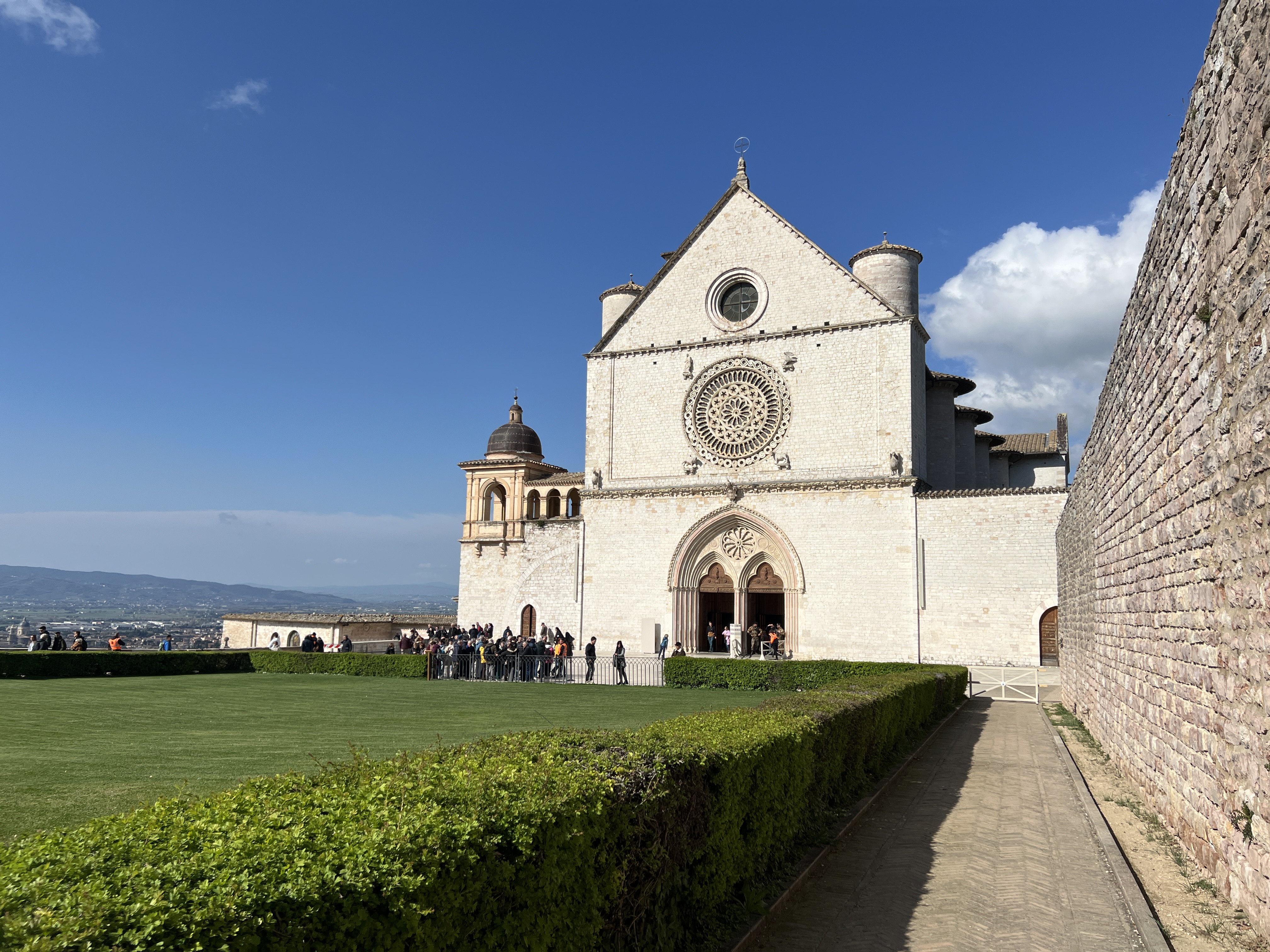
Assisi is widely known as a Catholic place of pilgrimage because the whole town still remains a stage upon which the life of Saint Francis and Franciscan spirituality continue to speak. The Basilica of Saint Francis and the Sacro Convento form the heart of pilgrimage in Assisi and are the central places in which one encounters Saint Francis and the Franciscan tradition most deeply.
As I entered Assisi, the Basilica of Saint Francis and the Sacro Convento, the friary of Saint Francis, immediately caught my eye upon the hillside. This place felt less like a tourist attraction and more like a place of witness, showing how one person’s life could change an age and become a living spirituality.
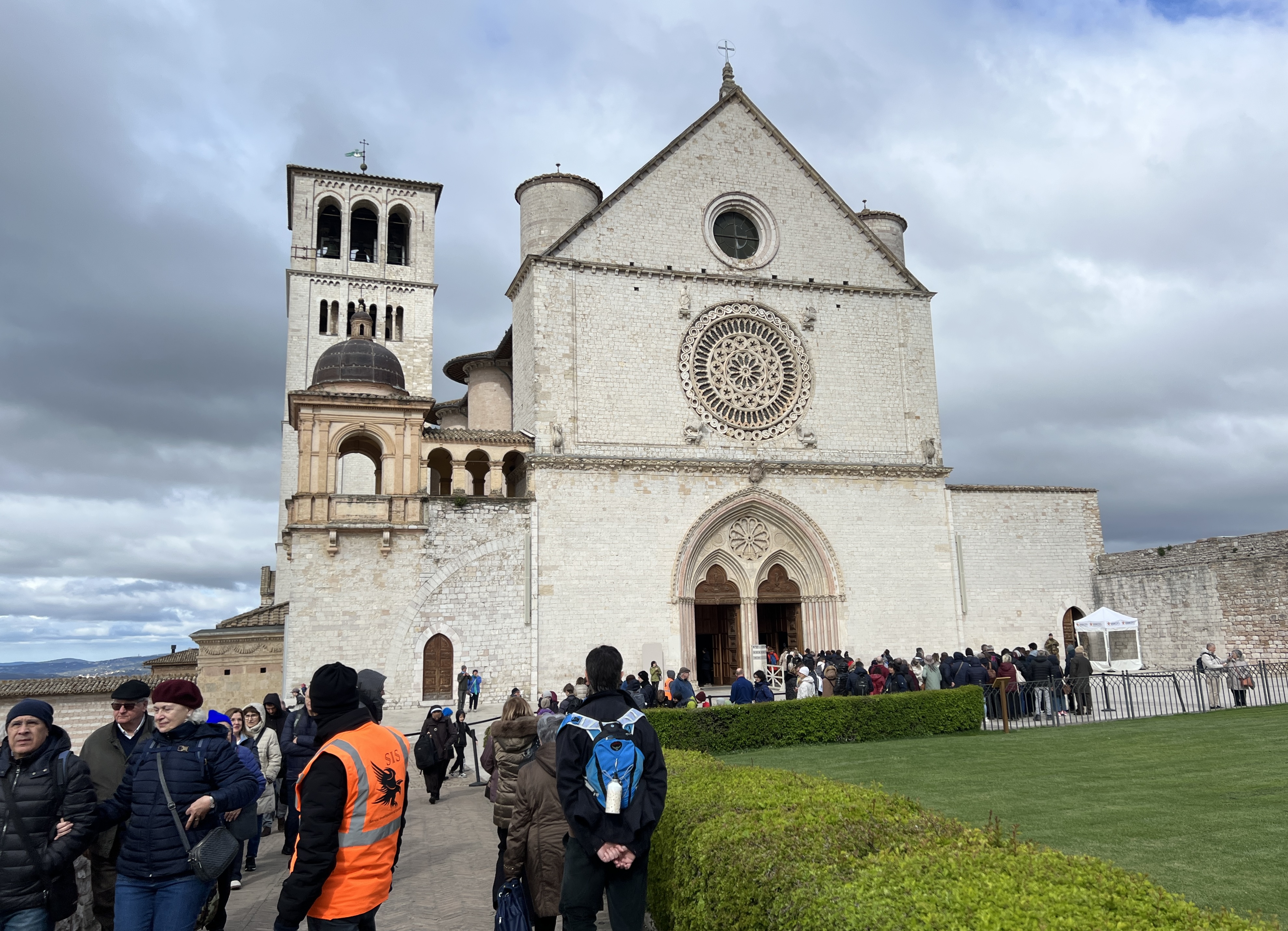

From the Hill of Hell to the Hill of Paradise
The church and convent stand as if pressed against the western slope of Assisi, with a deep valley opening out below. According to tradition, this hill was once called Colle dell’Inferno, the Hill of Hell. The very fact that ground once used for the execution of criminals came, through the name of Francis, to be known as the Hill of Paradise seemed in itself to explain something of the theology of Assisi.

The heart of Assisi, where two churches are layered one above the other
What makes this sacred complex so distinctive is its unusual structure: two churches arranged one above the other. Above stands the bright and soaring Upper Basilica; below lies the darker, more sunken Lower Basilica. Both proclaim the same faith, yet each does so through a different language of light and atmosphere.

The Upper Basilica
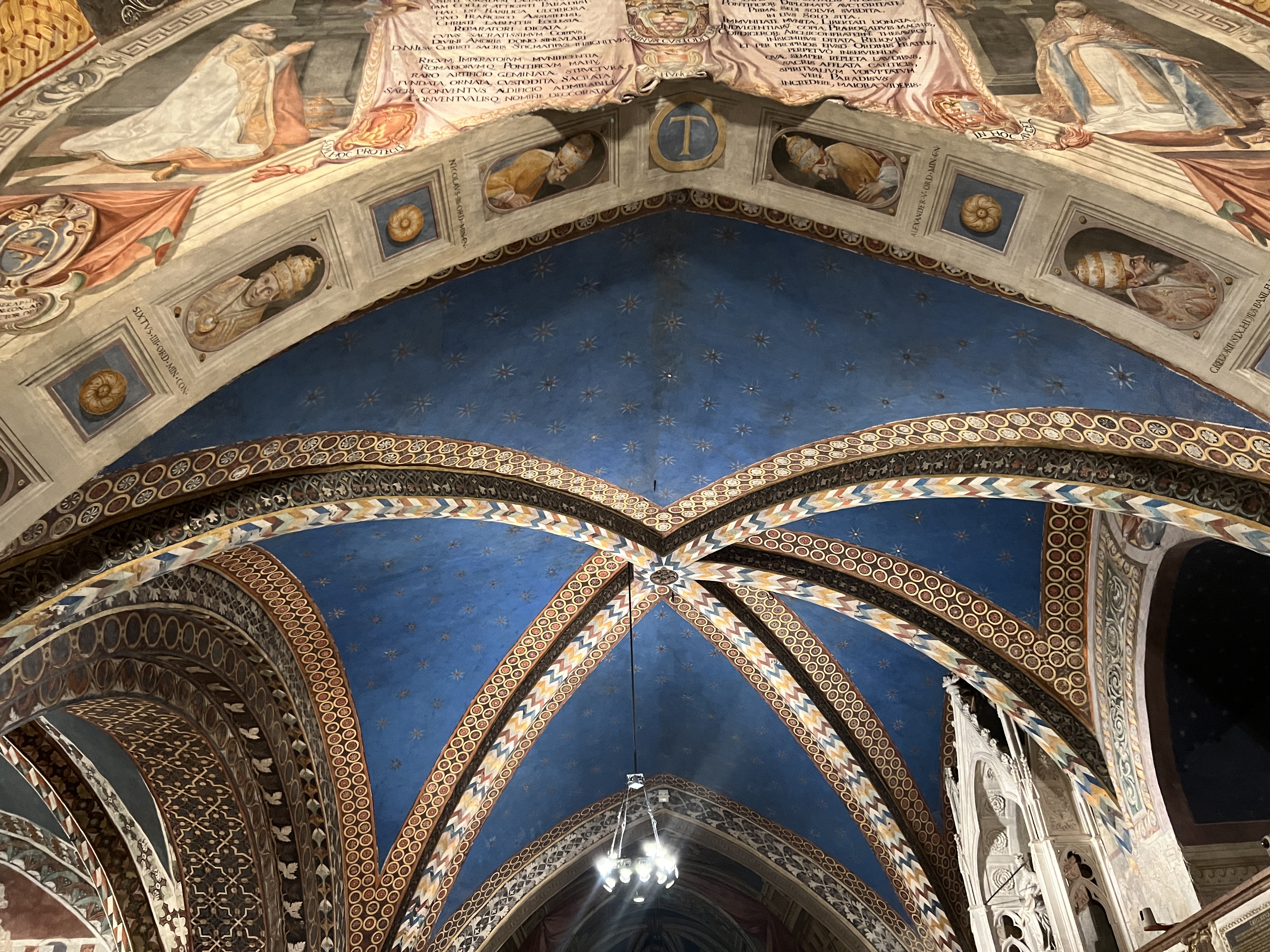
As one enters the Upper Basilica, the air seems to grow lighter and the eye is naturally drawn upwards. Its walls and ceilings seemed to reveal the very essence of medieval Italian sacred art, and I found it difficult to take my eyes away from the fresco cycle recounting the life of Saint Francis. The space has long been associated above all with Giotto, yet the presence of masters such as Cimabue, Simone Martini, and Pietro Lorenzetti can also be felt throughout the basilica as a whole. It helped me understand why Assisi is called not only a city of prayer but also a city of sacred painting.

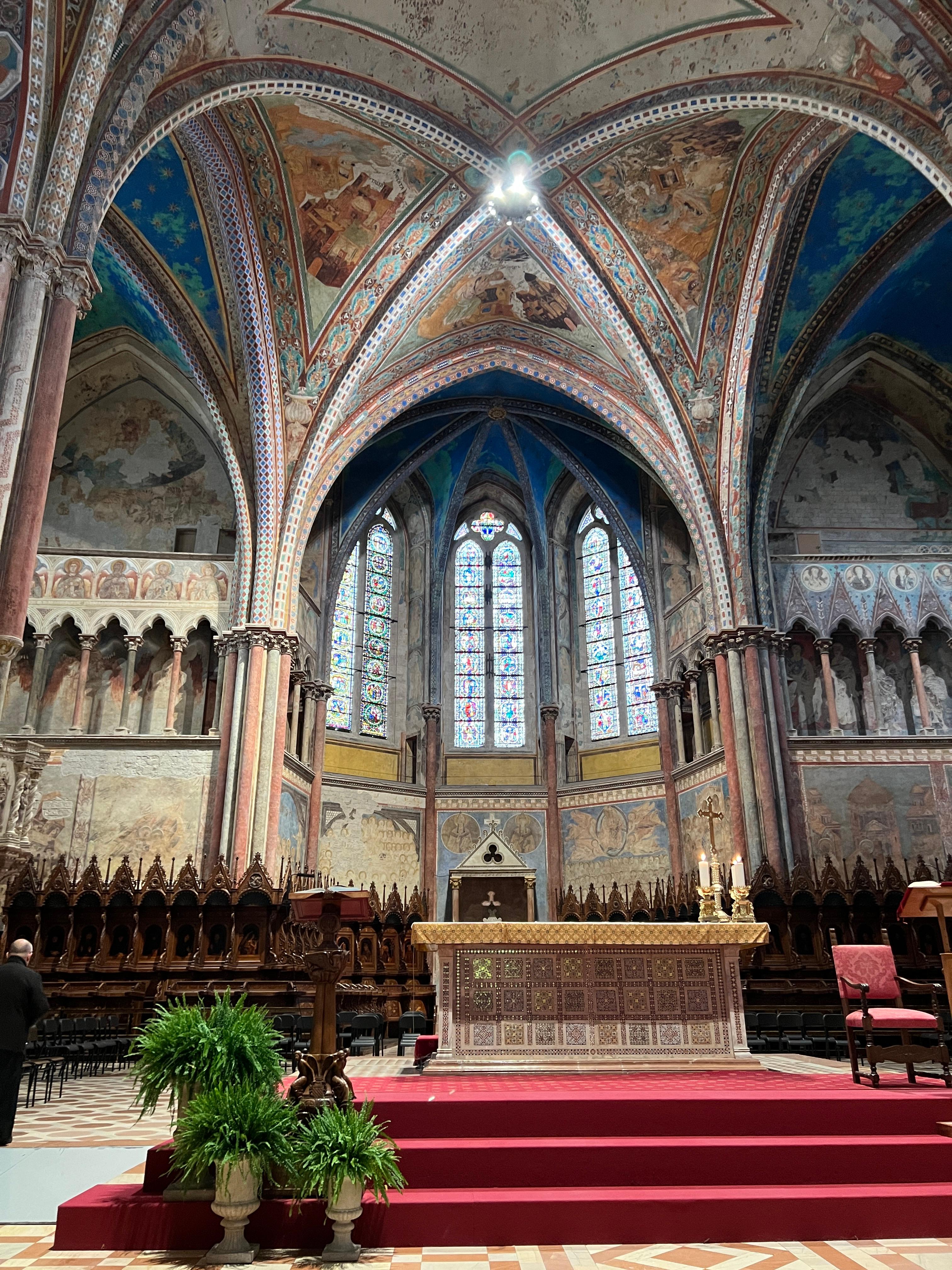

The Lower Basilica and the lower burial chapel
By contrast, the Lower Basilica is a place where darkness slowly settles beneath low and weighty arches. Even though long lines of pilgrims from all over the world had come for the veneration of the remains, a deep silence still filled the space. Following the steps downwards from there, one eventually reaches the lower burial chapel where the tomb of Saint Francis is found. The saint’s tomb was rediscovered in 1818, and the area was later arranged so that pilgrims might come close and pray there.
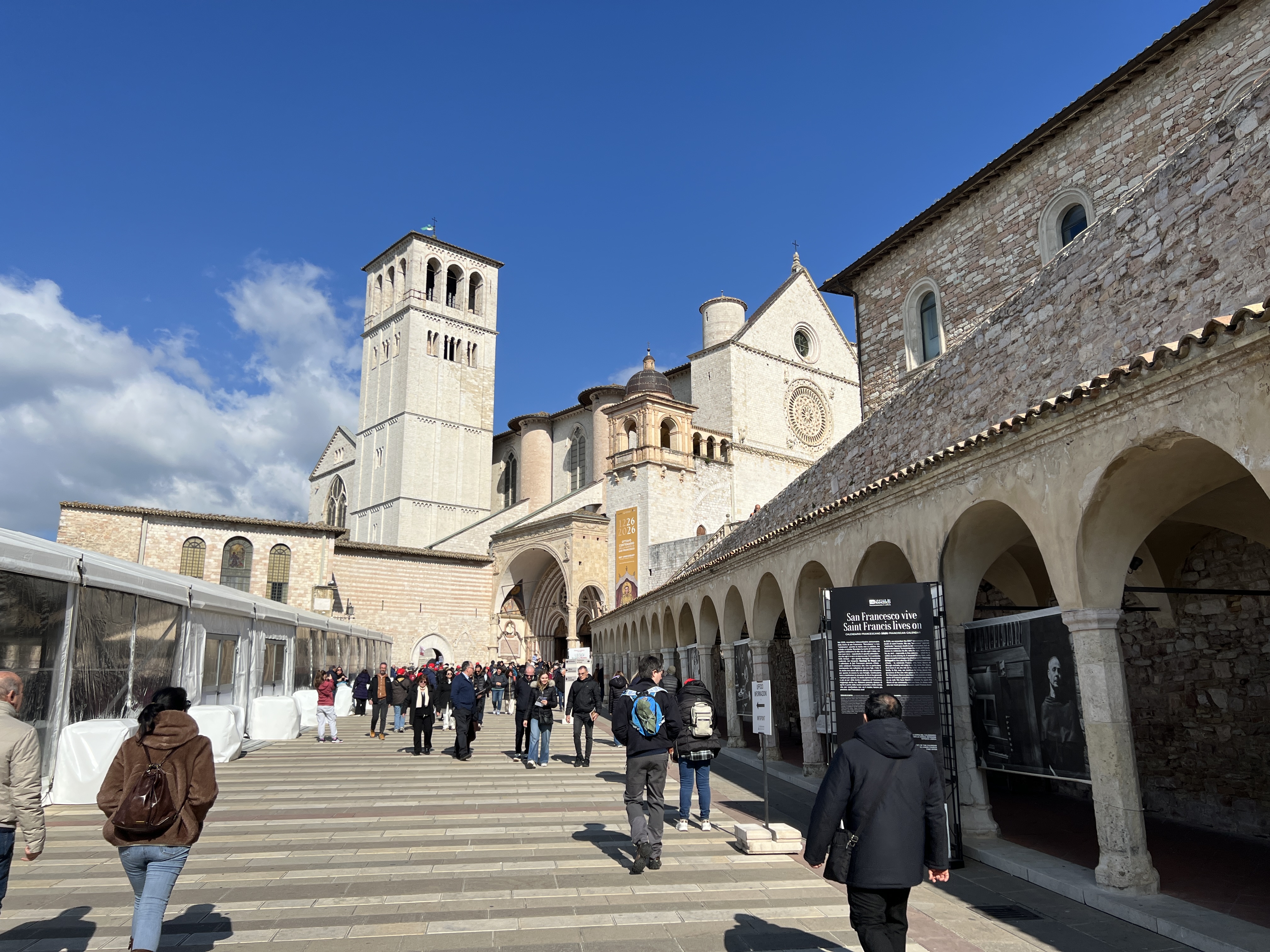

The Sacro Convento
Joined to the Basilica of Saint Francis, the Sacro Convento remains, even today, a monastic space deeply connected with the Conventual Friars Minor. It did not feel like a mere annex attached to the church, but rather a place where this whole complex continues to live on as a living site of faith.
It is also one of the core elements of the UNESCO World Heritage site inscribed in 2000 under the title “Assisi, the Basilica of San Francesco and Other Franciscan Sites”. The importance of this city does not lie only in its religious symbolism. As UNESCO explains, the medieval art and architecture preserved here, together with the works associated with Cimabue, Pietro Lorenzetti, Simone Martini, and Giotto, became decisive points of reference in the development of Italian and European art.

Who was Saint Francis?
Saint Francis was born in Assisi, Italy, around 1181 or 1182. He spent his youth as the son of a wealthy family, but at a certain point he changed the course of his life and chose the path of poverty, humility, and peace. He sought to live the Gospel not merely in words but in the way he lived, and by standing with the poor he became the starting point of the Franciscan tradition. He is also remembered as a saint who loved all creatures as part of God’s creation, and for that reason he is still deeply venerated today as a saint of peace, poverty, joy, and love.
A fuller account of Saint Francis continues in the post below.
Saint Francis — Lord, make me an instrument of Your peace: https://stella-mum.tistory.com/328
Offering a candle
In the Upper Basilica of Saint Francis, there were no real candles, only electric votive lights. A small light would come on when a coin was inserted. I too wished to offer a candle there, but I had only banknotes with me and felt awkward for a moment.
One of the friars responsible for guiding visitors in the basilica happened to be nearby, so I asked whether there might be somewhere to change a note into coins. He told me there was nowhere to do so. Seeing my embarrassment, he quietly handed me one of the coins he had with him.
When I placed that coin into the box, a small light came on, and I offered a brief prayer before it. It struck me that what remains longest in the heart after a pilgrimage is not always the grandeur of a great church, but often such small acts of kindness and quiet moments of prayer.
Pilgrimage notes
The most natural route is usually to begin in the Upper Basilica and then make one’s way down through the Lower Basilica to the lower burial chapel. In that way, the emotional movement of the visit unfolds almost of itself.
Even looking at the frescoes did not feel like merely admiring works of art; here too, it felt like a continuation of the pilgrimage itself.
After leaving the Basilica of Saint Francis, I stood for a long while in the square below. The thought came to me that a single church can teach one how to love, how to let go of what one possesses, and how to walk alongside the weak. Perhaps that is why this place remains at the very heart of pilgrimage.
Photography is strictly forbidden in both the Upper and Lower Basilicas of the Basilica of Saint Francis. Not knowing this rule at first, I took a few photographs before quickly being stopped, and I was left disappointed that I could not properly capture the beautiful fresco cycle depicting the life of Saint Francis.
Carving Saint Francis in olive wood
In Assisi, it was easy to notice how many olive trees grow throughout the area. I was also struck by the sight of hand-carved wooden statues of Saint Francis, made from olive wood, being sold as pilgrimage souvenirs. It felt especially meaningful because the image of the saint, who loved nature and saw all creatures as his brothers and sisters, seemed to be carved once again into the grain of the local wood.
On a pilgrimage path towards my mother, now a star – Little Star
#FranciscanSites #AssisiUNESCO #Giotto #Cimabue #SimoneMartini #PietroLorenzetti #SacredArt #ItalianPilgrimage #LentenPilgrimage #LittleStar
'성지순례 삼만리 여정 > 바실리카_Basilica' 카테고리의 다른 글
| 로마 성 바오로 대성전 밖 (Basilica of St. Paul Outside the Walls) (0) | 2026.04.08 |
|---|---|
| 아시시의 성 프란치스코 대성당과 사크로 콘벤토. (1) | 2026.03.31 |
| St Peter’s Basilica, Vatican City (Basilica di San Pietro) (0) | 2026.03.29 |
| The Dome of St Peter’s Basilica — Returning at Dawn to the Sky Above the Vatican (0) | 2026.03.28 |
| 성 베드로 대성전의 돔 — 새벽에 다시 오른 바티칸의 하늘. (3) | 2026.03.28 |


