The Salt Cathedral in Zipaquirá, near Bogotá in Colombia, is often introduced as being made from “700-million-year-old salt”. It sounded almost impossible—building a cathedral out of salt—so I set off for Zipaquirá with my curiosity fully awake. Downwards, and further down—at around 180 metres below ground, the white world I encountered was, quite simply, breathtaking.
A cathedral made of salt—can that really be possible?
This place was originally a rock-salt mine. It is said that miners, constantly exposed to danger deep in the tunnels, created a small prayer space inside the mine to ask for protection and safety. Over time, that modest place of prayer was expanded and refined, eventually becoming today’s “underground cathedral”. Even before I left, it felt as if a film had already begun playing in my mind.
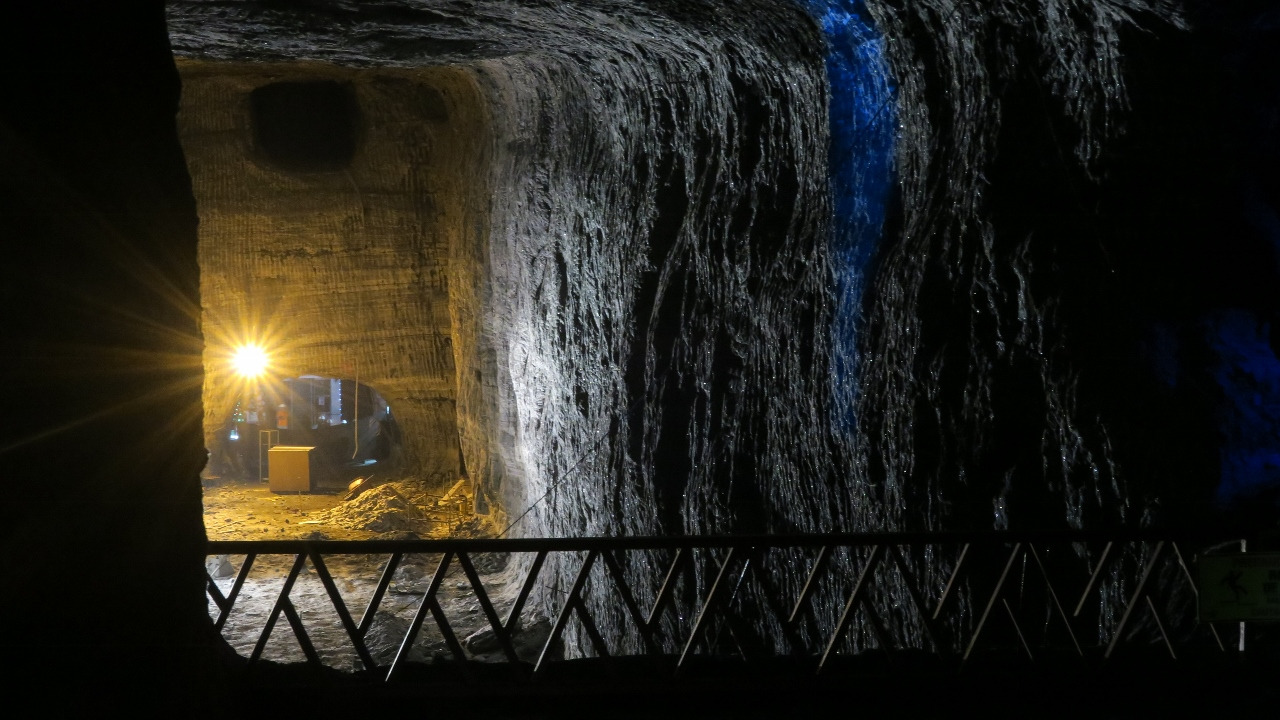
And then, the moment I took my first step down the stairs, the air changed instantly. As I descended to around 180 metres below ground (some sources describe it as 200 metres), the air grew colder and it felt as though the sounds of the world had been turned off. Each time the pale grain of salt in the walls caught a faint light and glimmered, I felt it more clearly: I really am going into the earth.
Ah—there truly is a cathedral, this deep underground. From here, I step into a mysterious kind of time that no photograph can ever fully capture.
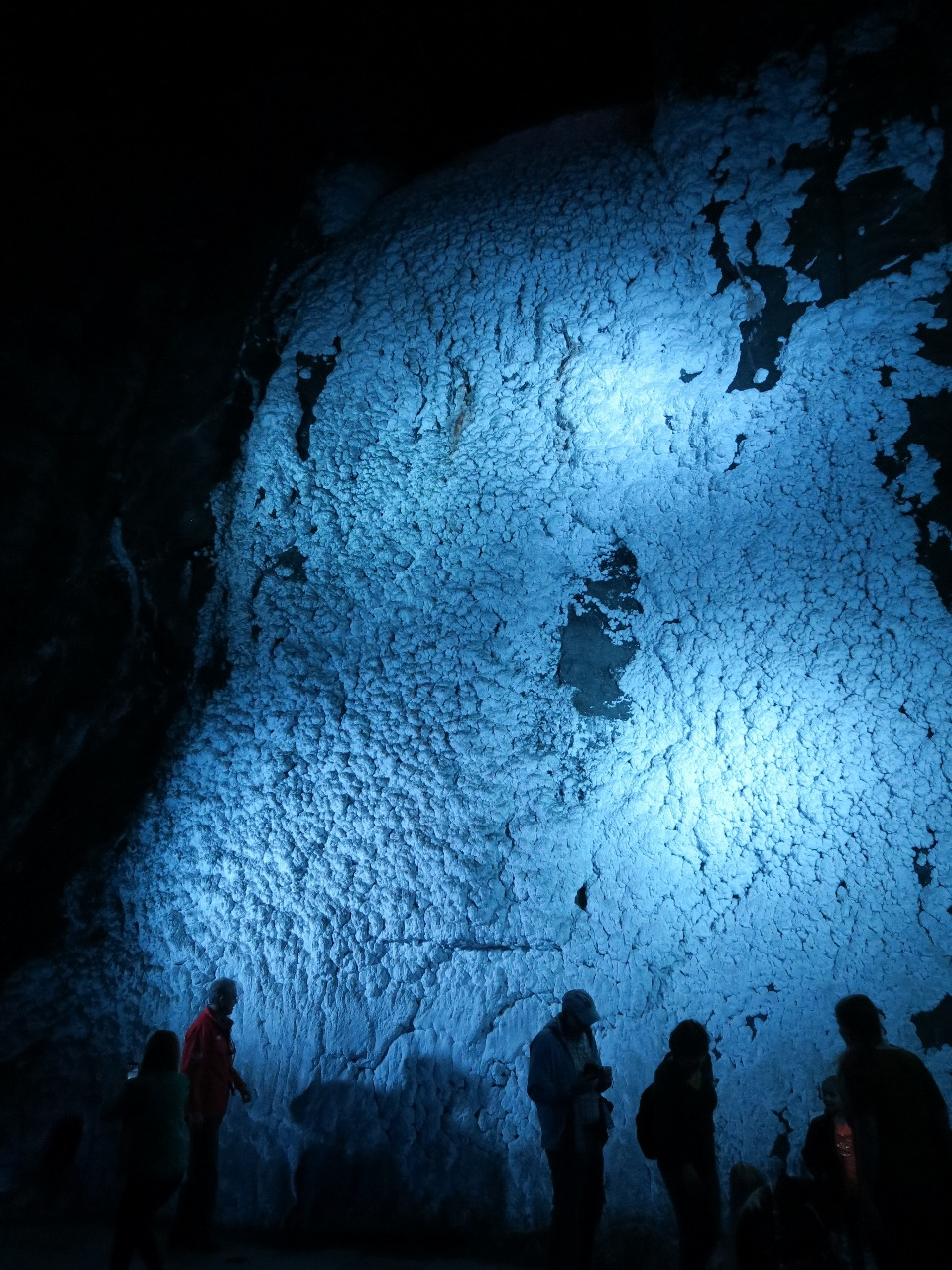
The Salt Cathedral of Zipaquirá
It is said that this vast underground space of white salt became widely known in 1954, when the “old Salt Cathedral” opened inside the mine tunnels. The salt layers here are explained as sedimentary deposits formed long ago in a sea (or a highly saline marine environment), later left behind through geological change. Locally, it is often spoken of as “700-million-year-old salt”, yet other sources describe it as 70 million years old, or around 200 million. So I decided to receive it simply as “salt left behind by the sea’s unimaginably ancient time”.

One of the greatest underground cathedrals still in existence
This mountain—made up of immense rock-salt layers—began to attract broader attention from the mid-1950s. The miners, working deep inside the tunnels while facing constant danger, created a prayer space within the mine to seek protection. Over the years, that small place of prayer expanded into huge salt crosses and worship spaces, eventually growing into the form of an “underground cathedral”.
As you go deeper, the air becomes colder, and even the texture of light feels different. That sensation alone makes it feel as if you are entering a sacred space beneath the earth. Perhaps that is why the Salt Cathedral is sometimes introduced with the kind of praise reserved for rare places: “one of the greatest underground cathedrals still in existence”.

The 14 Stations of the Cross
From the entrance all the way to the innermost sections, the mine tunnels continue in a long line. As you walk along the route, fourteen themed spaces appear one after another. This is designed to evoke the Stations of the Cross (14 Stations), commemorating Jesus’ Passion. At each point, you find salt-carved crosses and forms, along with small spaces for prayer.
The story of the 14 Stations continues in the post below.
The 14 Stations of the Cross at the Salt Cathedral of Zipaquirá: https://stella-mum.tistory.com/285
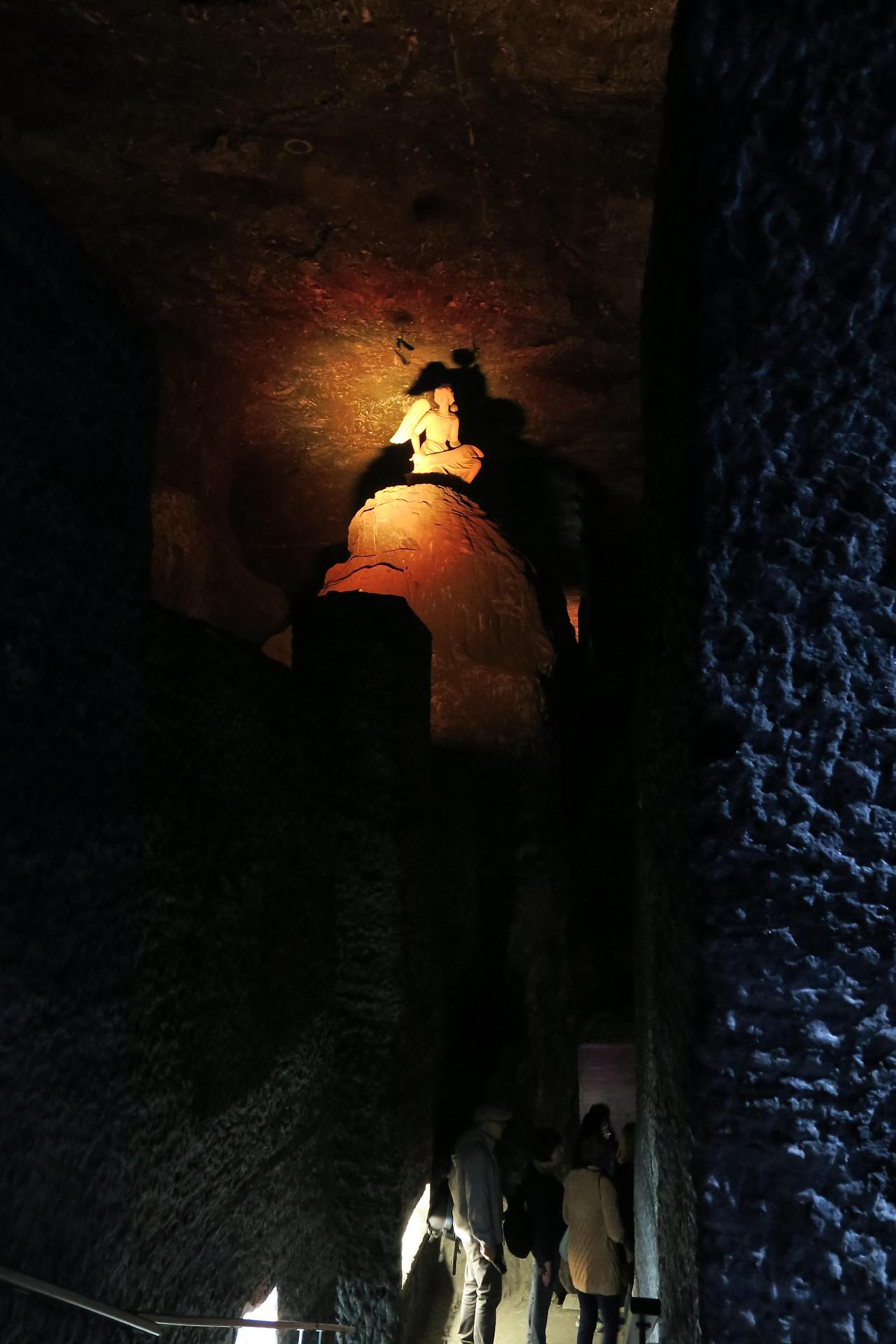
Salt crosses shining at around 180 metres below ground
When you reach the end of the tunnel, you arrive at the largest worship space. The current Salt Cathedral is introduced as having been newly created in the 1990s and opened in 1995. Its design was selected through a public competition, and the architect Roswell Garavito Pearl is often mentioned in connection with the project.

In the dark underground, the moment the lighting falls upon the salt crosses, it feels far more than decorative—it transforms the entire mood of the space. When the cross seems to float softly in the cold air, I began to understand why this place is remembered as “mysterious” and “spiritual”.
Behind the main cathedral space, there is a small screening area where a short 3D video is shown for visitors. Through a guided tour of about an hour, you can listen to the story of how the mine and cathedral came into being, and feel how “mine” and “cathedral” overlap within a single place.
Nearby, there is a smaller chapel space as well, and Mass is said to be held there on Sundays. Thinking of people descending underground for Sunday Mass, my curiosity as a traveller tilted—almost without noticing—towards reverence. Perhaps faith is sometimes a willingness to go down, this far down.

The passage into the cathedral was far darker than I expected—at first I genuinely couldn’t see anything. Then the lights along the tunnel began to switch on one by one as people moved, and an Ave Maria hymn started to flow through the darkness. From that moment, my heart grew quiet and solemn.
After passing through the long darkness and following the spiral route, crosses enclosed by salt walls begin to appear, one after another. They say there are fourteen crosses along the Stations of the Cross, and the way they shimmer under coloured lighting felt deeply mysterious.

In the pitch-dark tunnel, what finally enters your eyes is the cross itself. Many crosses are carved directly into the walls, while some are formed more like pillars. Especially the wall-carved crosses—so smooth and pale—can make you forget you are looking at salt, as they sometimes resemble marble. In this place, even a faint faith seems to become clearer—like seasoning a dish with a pinch of salt.

The salt pond
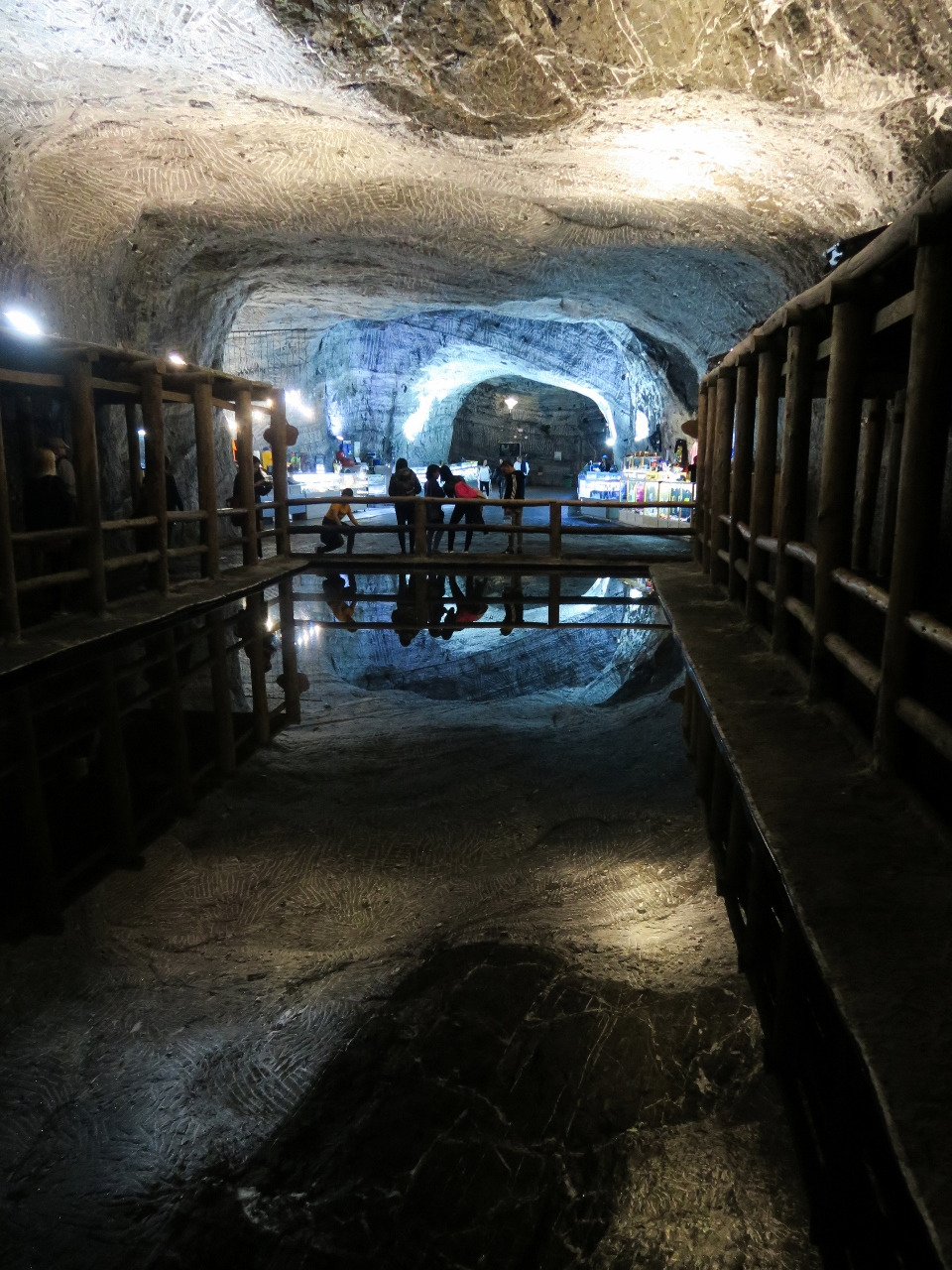
The salt pond I encountered deep inside the cathedral was pure mystery itself. Objects were reflected in complete stillness, and then the salt ceiling mirrored itself again above the water. It was so beautiful that I stood there, spellbound, just watching. Perhaps it is a pond that invites the imagination—“a pool that cleanses the soul at the threshold of another world”.
The story of the salt pond continues in the post below.
The Salt Pond (SaltPond)—a ‘mirror of water’ underground: https://stella-mum.tistory.com/283
Salt-Built Hallstatt Civilisation
How did salt create a region’s prosperity, and even remain as the name of a civilisation? Click below for the story of Hallstatt, Austria.
Salt-Built Hallstatt Civilisation: https://stella-mum.tistory.com/282
Souvenir shops inside the Salt Cathedral
I was surprised to find several souvenir shops inside the Salt Cathedral, along with spaces that seemed to connect to a restaurant and even something like a performance hall. “Why would such commercial facilities be needed this deep underground?” As more rooms appeared—some with unclear purpose—my curiosity was followed closely by unease.
The full story continues here.
Zipaquirá Salt Cathedral Window Display — The Gift Shop: https://stella-mum.tistory.com/298
One Hundred Years of Solitude
The reason the Salt Cathedral connects, in my mind, to One Hundred Years of Solitude is that its author, Gabriel García Márquez, is said to have continued his studies in Zipaquirá during his teenage years and lived there as a boarder. Realising that this “city of salt” also held a writer’s formative years, a quiet sense of reverence rose in me.
I first encountered the story through a TV series, and through my Korean lens, many scenes felt unfamiliar and strange—at times, like a cultural shock. What, then, is the texture of myth and memory that Colombia holds?
The story connecting One Hundred Years of Solitude and Zipaquirá continues below.
One Hundred Years of Solitude, blooming in Colombia’s Salt Cathedral: https://stella-mum.tistory.com/299
How to get to the Salt Cathedral (Bogotá → Zipaquirá)
The Salt Cathedral of Zipaquirá is north of Bogotá. If traffic is reasonable, it usually takes about 1 hour 30 minutes to 2 hours. Tours are convenient, but it is also entirely possible to go by public transport.
Bogotá city centre → Portal Norte (PortalNorte)
Take TransMilenio to Portal Norte, the northern terminal.
As of 2026, the basic TransMilenio fare is 3,550 pesos.
Older posts sometimes mention specific route numbers (such as “B74”), but these can change depending on reorganisations and starting points. In a blog post, it is safer to describe the journey by destination—“take a line towards Portal Norte”—rather than rely on route numbers.
Portal Norte → intermunicipal bus to Zipaquirá
Near Portal Norte, you can connect to intermunicipal buses going to places such as Chía, Cajicá, and Zipaquirá.
Look for “Zipaquirá” on the signs and find the bus (or ticket booth) accordingly.
As of 2026, a fare of 10,500 pesos to Zipaquirá has been shown in some guidance (it may vary by company and time).
Arriving in Zipaquirá → up to the Salt Cathedral (ParqueDeLaSal)
After arriving in town (or at the terminal), head to Catedral de Sal / Parque de la Sal.
The simplest option: taxi (saying “Catedral de Sal” is usually enough).
- If using public transport: take a local bus/route up towards the entrance.
As of 2026, local public transport fares in Zipaquirá have been described at around 2,700 pesos (daytime; subject to change).
A taxi fare of 7,800 pesos has also been posted in some cases (may vary).
Walking is possible too—some travellers hike up from the town centre. But if it is close to sunset, it is best not to push it.
For the return journey, you generally come back down to Zipaquirá town (or the terminal), then take an intermunicipal bus back towards northern Bogotá (Portal Norte / Terminal del Norte direction). On the way back, the route may pass through Chía, and signage may differ (PortalNorte/TerminaldelNorte/TerminalSatelitedelNorte), which can be confusing—so it is safer to confirm the destination name rather than rely on route numbers. Queues can be crowded, so keep your phone and camera out of your hands and zipped safely inside your bag.
Wieliczka Salt Mine, Poland
Another place that shows how beautifully an underground mine can be transformed is the Wieliczka Salt Mine in Poland. Located near Kraków, it is often described as one of Europe’s oldest salt mines. Compared with the salt mine at Hallstatt in Austria, it differs clearly in scale and history. The tunnels at Wieliczka stretch to around 300 kilometres, and its history spans more than 700 years. It is said to have operated from the 1250s until recent times, and it is listed as a UNESCO World Heritage site.
The story of Wieliczka continues below.
Subterranean salt sanctuaries—Wieliczka and Zipaquirá: https://stella-mum.tistory.com/286
On a pilgrimage path towards my mother, now a star
– Little Star
#CatholicPilgrimage #ColombiaTopAttraction #BogotaTopAttraction #Bogota #ColombiaTravel #Cathedral #CatedraldeSal #HowToGetToSaltCathedral #Wieliczka #ColombiaCapital
'성지순례 삼만리 여정 > 대성당_Cathedral' 카테고리의 다른 글
| 이탈리아 오르비에토 대성당. (2) | 2026.03.27 |
|---|---|
| 브뤼헤 성 구세주 대성당 (St. Salvator’s Cathedral) — 도시의 좌좌(座座), 플랑드르 예술의 금고 (1) | 2026.03.01 |
| 7억 년 전 소금으로 만들어진 대성당. (4) | 2026.02.23 |
| 소금이 세운 할슈타트 문명(Hallstatt). (0) | 2026.02.23 |
| Zipaquirá Salt Cathedral Window Display — The Gift Shop (0) | 2026.02.23 |


