The moment I parked in the free car park below Orvieto’s old town and looked up towards the cliff above, I could tell that the true centre of this city was the place where the cathedral stood. As I took the funicular up to the top, I found myself wondering how people in earlier times, before such a convenient means of transport existed, had ever managed to make their way up and down this cliff-top city. Then, as I slowly walked along the exotically beautiful lanes and the view suddenly opened out, Orvieto Cathedral — the Duomo — appeared before me in full. It made me wonder: why did Orvieto come to rest on such a high cliff, and why did people choose to build so magnificent a cathedral here?

Orvieto Cathedral, Duomo di Orvieto
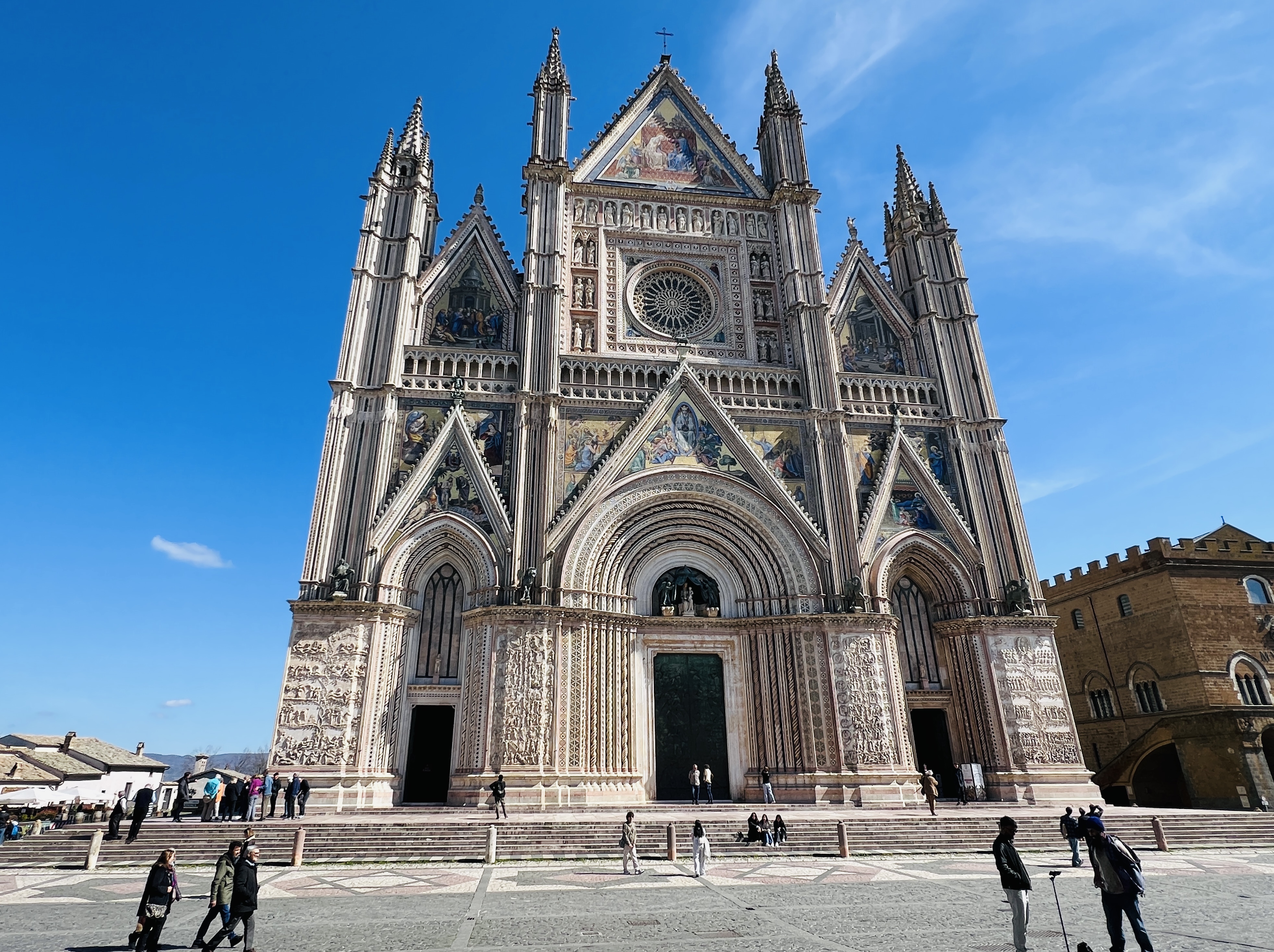
Perched upon the cliff, Orvieto seemed to express its entire identity through this one cathedral. Dedicated to the Blessed Virgin Mary, this majestic church felt like a symbol in which the city’s faith, history, and civic pride had all been gathered together.

Behind this great Duomo lies the Eucharistic miracle said to have taken place in nearby Bolsena in 1263. According to tradition, while a priest was celebrating Mass, blood flowed from the consecrated Host and stained the altar cloth. That relic, the Corporal, is preserved to this day within Orvieto Cathedral.
A centre of faith that drew the attention of the medieval Church
This event changed the fate of the city. Orvieto was no longer merely a fortified town upon a cliff, but began to emerge as a centre of faith that drew the attention of the medieval Church. Then, in 1290, Pope Nicholas IV laid the first stone, marking the true beginning of this magnificent cathedral’s history.

This cathedral was not simply a large and beautiful building. It was the result of faith, politics, and the great currents of medieval Europe all converging upon this cliff-top city. At the same time, it felt like Orvieto’s most magnificent way of revealing itself to the world.

The face of the Duomo: what can only be seen up close
The front façade of the Orvieto Duomo looks splendid in photographs, but standing close to it brought an entirely different kind of emotion. The gleam of the golden mosaics, the density of the finely carved sculpture, and the upward-thrusting lines seemed to pass directly into me as I stood in the square. It felt less like the work of a single age than the fruit of faith and art built up over many centuries.
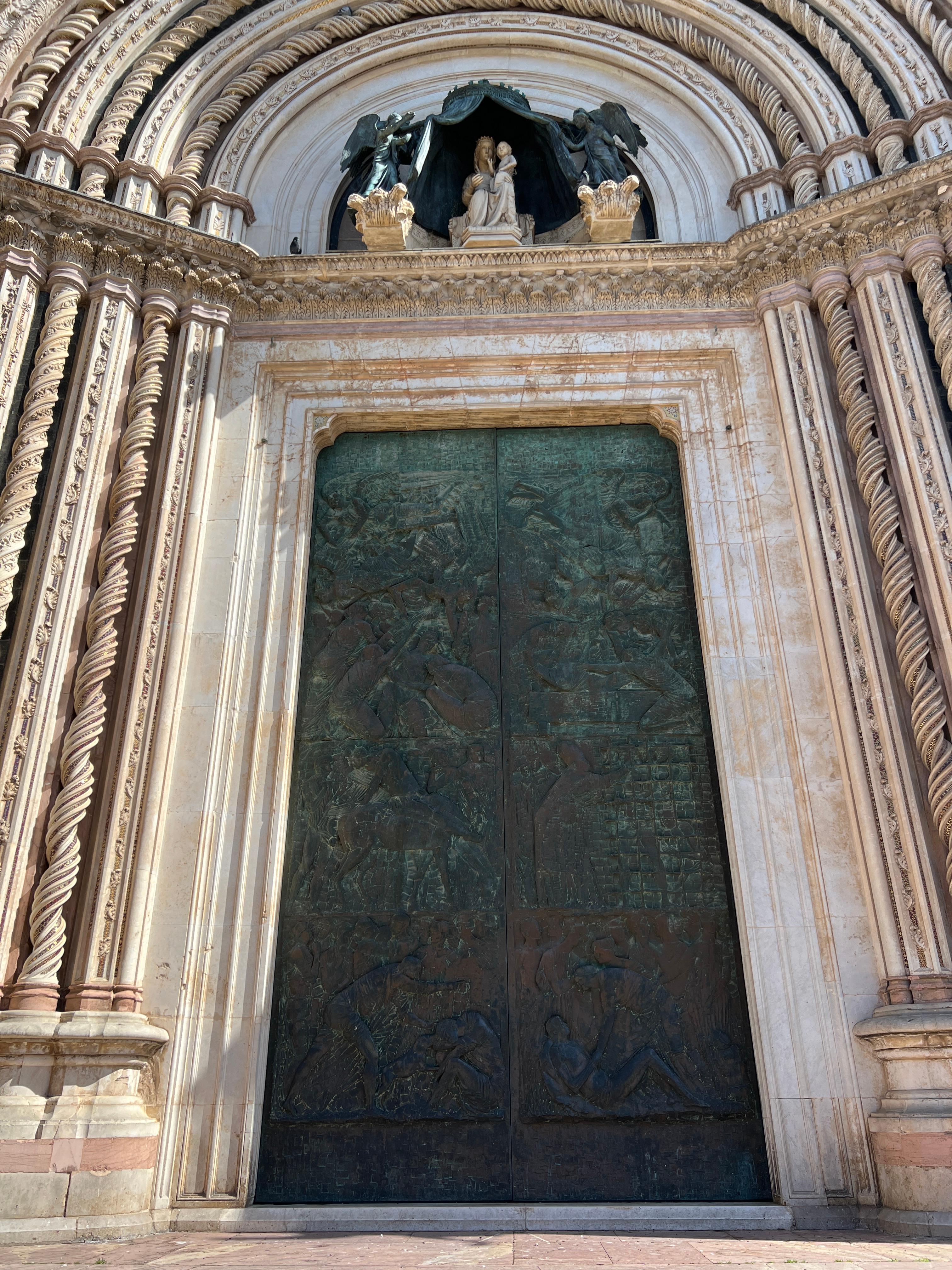
According to the official account, work on the façade began around 1310 and was completed in 1532, with Lorenzo Maitani playing a central role. He is remembered as one of the key figures in the design and decoration of the Duomo’s façade.

Standing before the face of this cathedral, the word that came to mind was not “completion” but “accumulation”. This Duomo felt not like the achievement of one person or one age, but like a face shaped by centuries of time and countless hands.
The two spaces inside the Duomo that stayed with me most
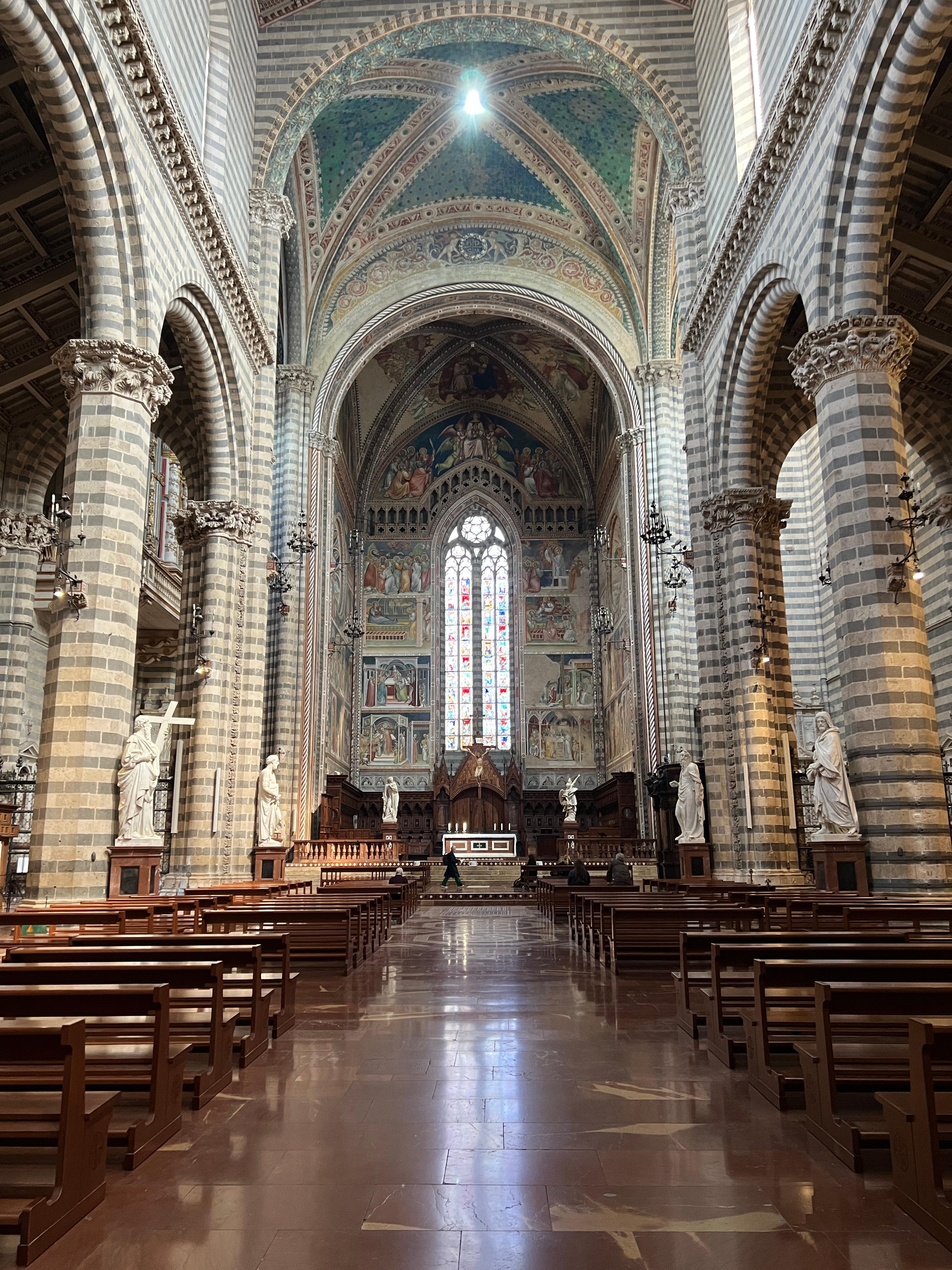
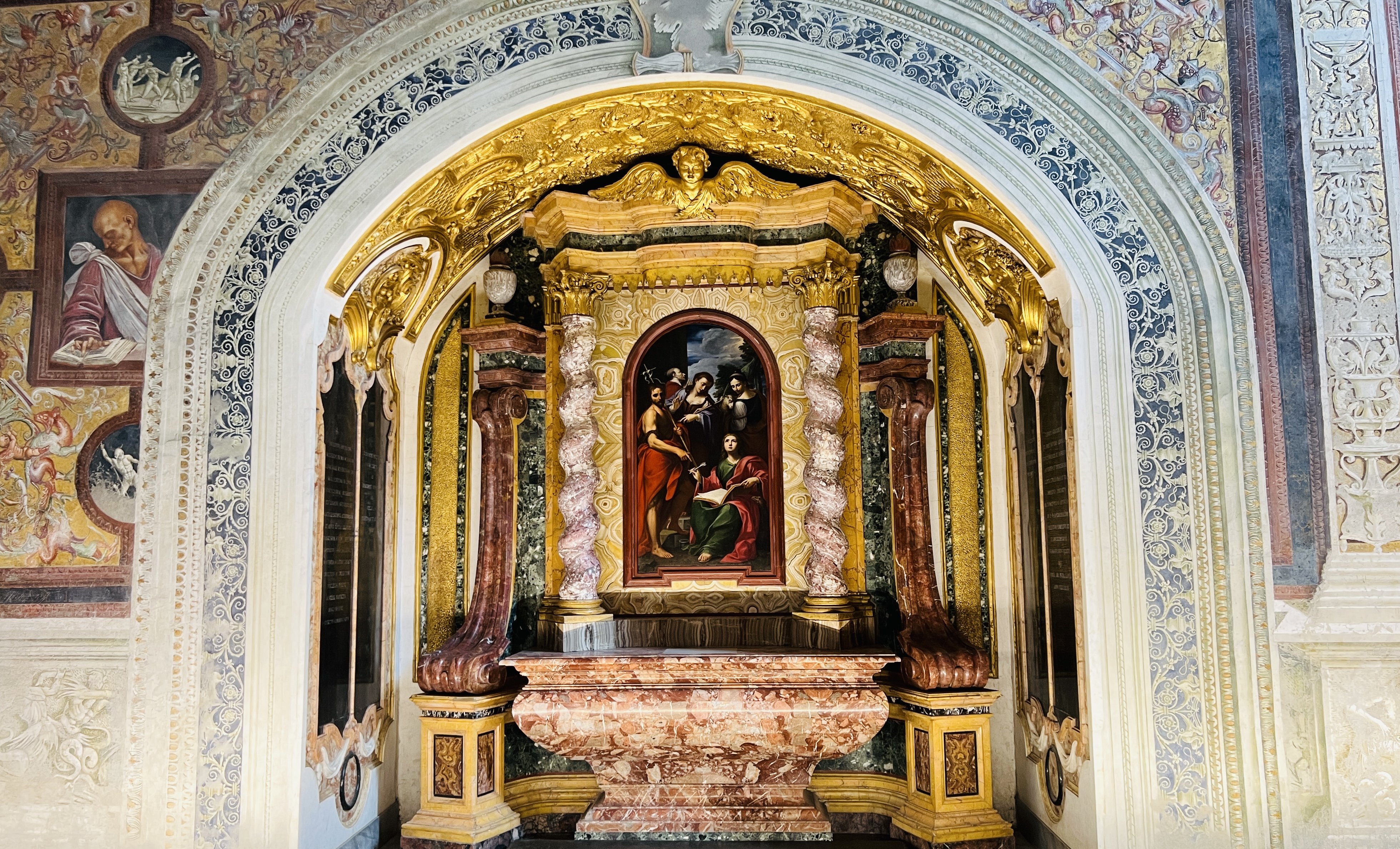
Rather than trying to take in the whole interior at once, I found my heart lingering especially before two chapels.
(1) Cappella del Corporale
This is the chapel that houses the Corporal, the relic associated with the Eucharistic miracle of Bolsena. It felt like one of the most important centres of devotion within the Orvieto Duomo, and a key space in shaping the religious identity of the city since the Middle Ages. To me, this chapel seemed not merely a beautiful place of worship, but a sacred vessel that had held and guarded the relic in faith.

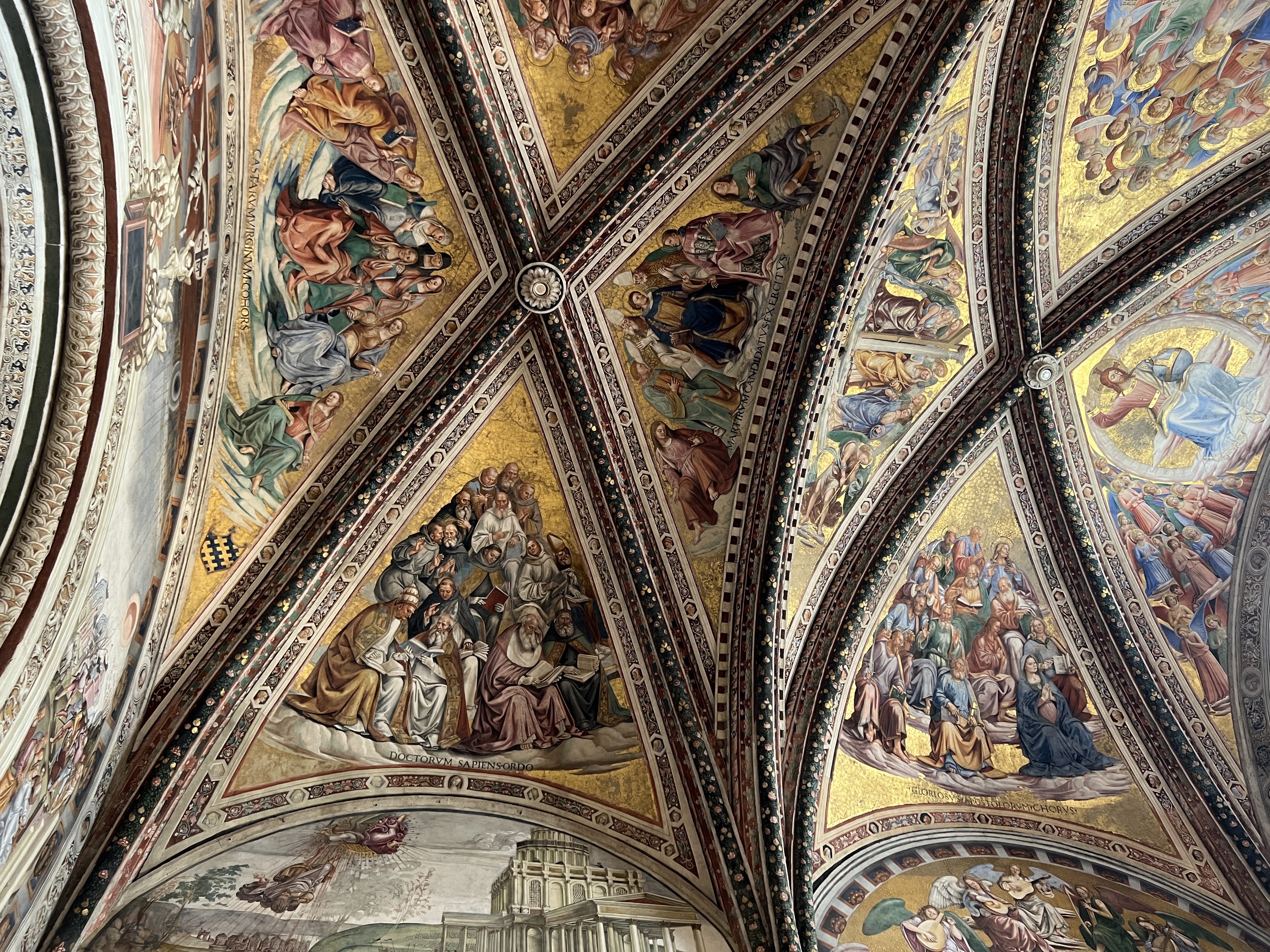
(2) Cappella di San Brizio
This chapel conveys an intensity of an entirely different order. It is widely known for Luca Signorelli’s great cycle of frescoes, in which scenes of the end of the world, resurrection, and judgement unfold with overwhelming force.

According to official accounts, Signorelli worked in this chapel from 1499 to 1504. The space shows that the Orvieto Duomo is not only a Gothic cathedral, but also an important site of Renaissance painting. Yet the decoration of this chapel was not begun by Signorelli alone; before him, Fra Angelico and Benozzo Gozzoli had already completed part of the work, which Signorelli later brought to fulfilment.
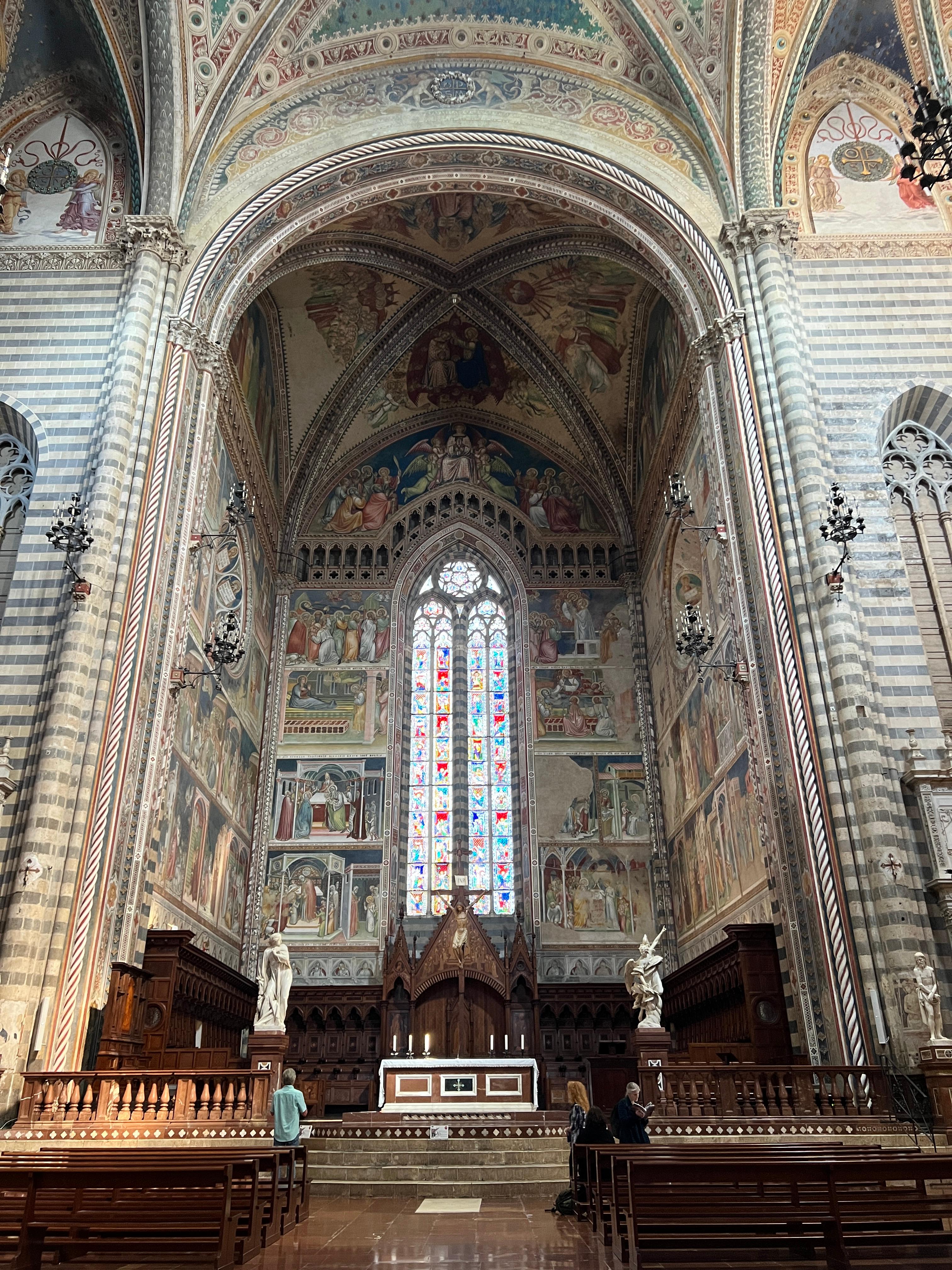

As I stood facing the walls, it felt less as though I were looking at paintings and more as though I were slowly stepping into a vast narrative of the end times. These two spaces moved me in utterly different ways. One was the centre of Eucharistic devotion; the other felt like an artistic space in which human destiny, salvation, and judgement are confronted directly.
A few useful details for pilgrims
The Orvieto Duomo requires an entrance ticket. According to the official website, the standard ticket costs 8 euros, and with this single ticket visitors may enter the Duomo, the Emilio Greco Museum, and the underground spaces beneath the cathedral. An audio guide is included, and according to the official FAQ, the Chapel of San Brizio is also accessible with the same ticket.

Mass times and liturgical schedules are also listed on the official website, which makes it easier for pilgrims to plan their visit. In particular, tourist visits to the high altar and the Chapel of San Brizio are restricted while liturgical services are being celebrated, which reminded me once again that this is not simply a tourist site, but a living place of prayer.

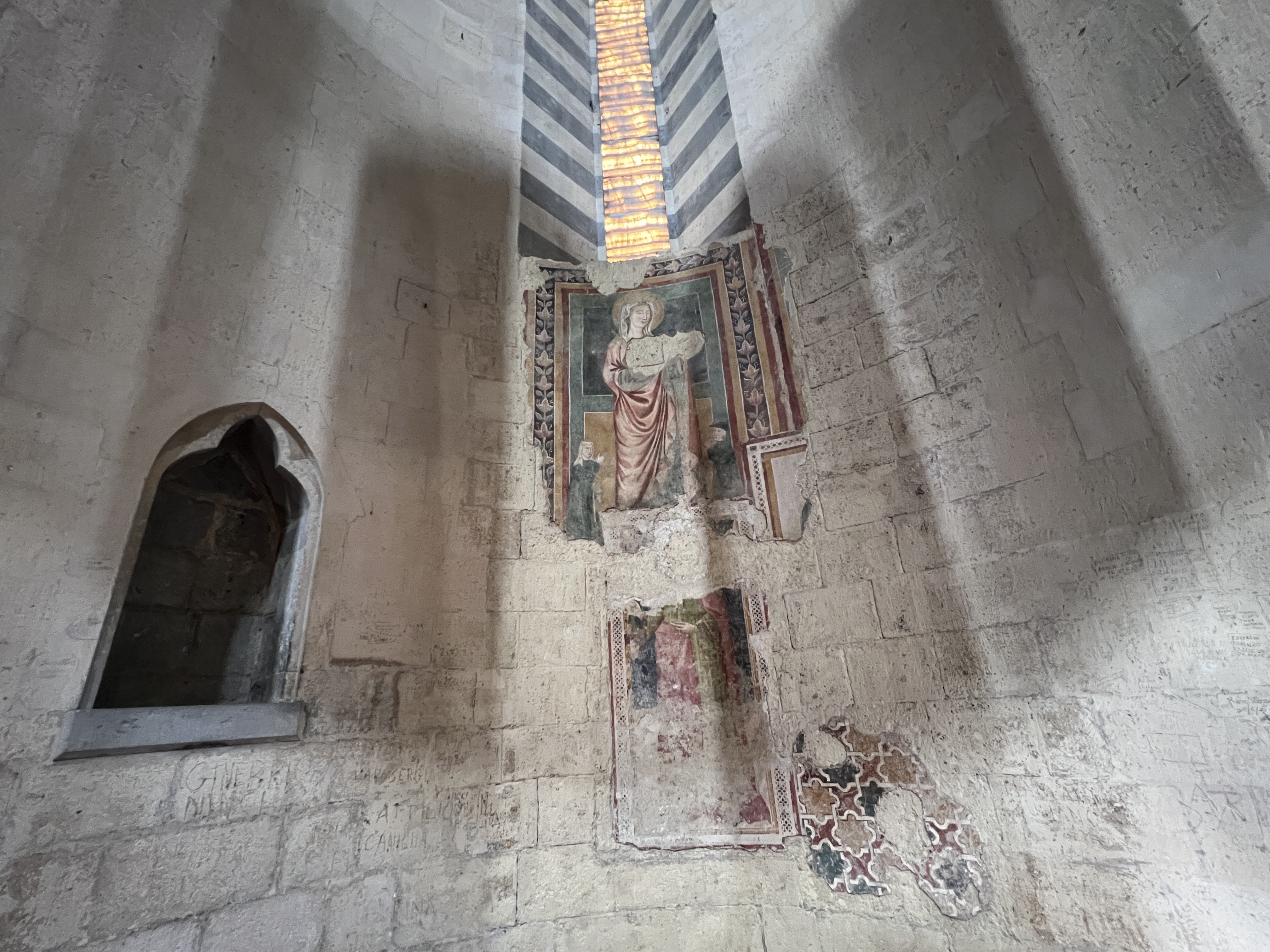
Another striking feature is the underground area of the Duomo. It shows that this cathedral is not majestic only in its height. According to the official explanation, beneath the transept and chapels runs an underground passage of around 800 square metres, where traces of former storage spaces and of the cathedral’s building works may still be seen.


What Orvieto says through its Duomo
The people who built their city upon the cliff first raised this radiant façade towards heaven. Within it are held both the story of faith surrounding the relic and the Renaissance vision that gave form to the end of the world.
The centre of this city is not simply a place, but a narrative, and the point at which that narrative gathers most densely is the Duomo.
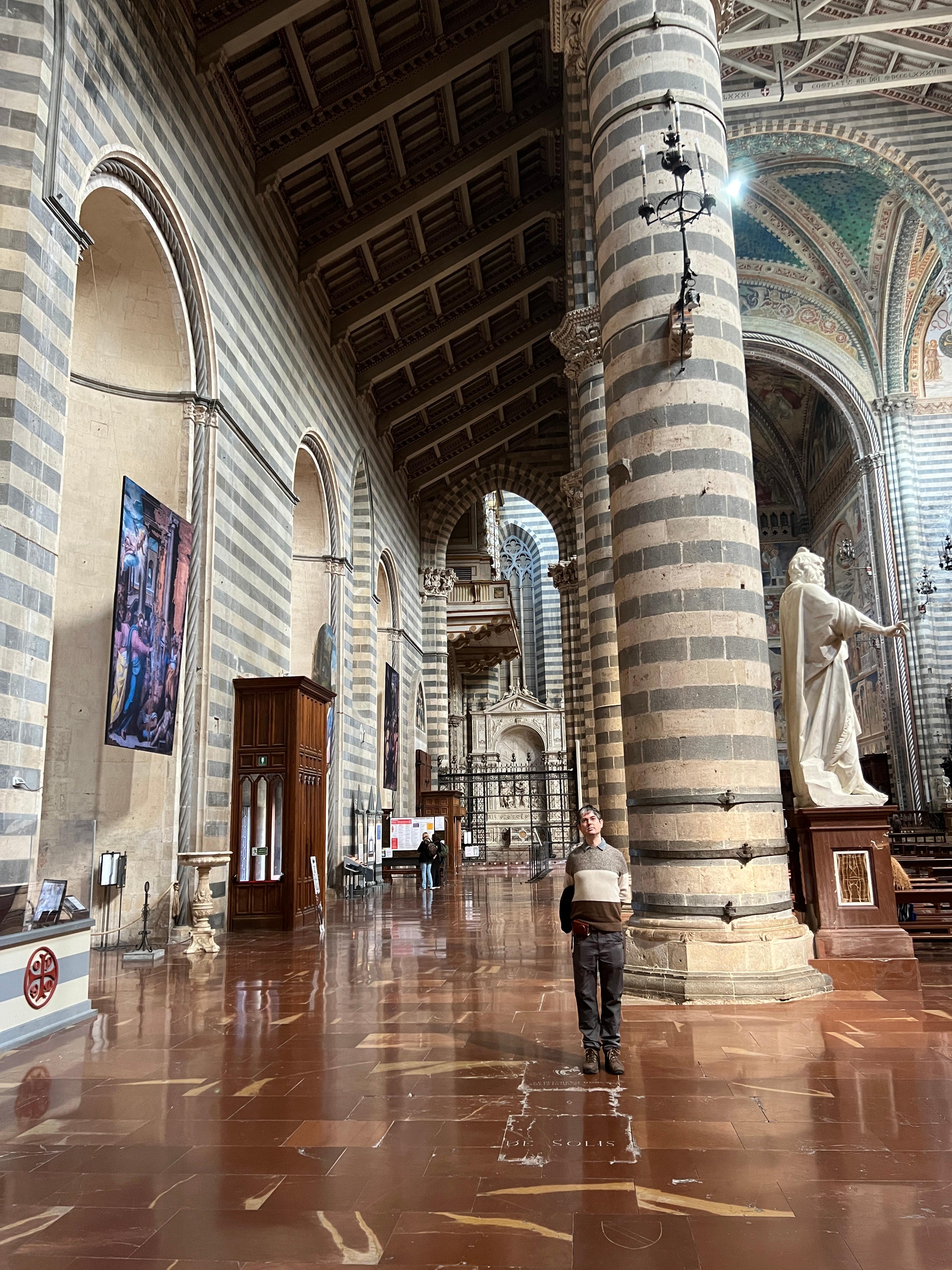
On a pilgrimage path towards my mother, now a star
– Little Star
#Signorelli #Frescoes #GothicArchitecture #MedievalArchitecture #RenaissanceArt #OrvietoMustSee
'성지순례 삼만리 여정 > 대성당_Cathedral' 카테고리의 다른 글
| 웨일즈 카디프의 랜드애프 대성당(Llandaff Cathedral), UK (0) | 2026.04.06 |
|---|---|
| 웨일즈 세인트 데이비즈 대성당 — 바다 끝의 순례지, UK (1) | 2026.04.06 |
| 이탈리아 오르비에토 대성당. (2) | 2026.03.27 |
| 브뤼헤 성 구세주 대성당 (St. Salvator’s Cathedral) — 도시의 좌좌(座座), 플랑드르 예술의 금고 (1) | 2026.03.01 |
| The Cathedral Made of 700-Million-Year-Old Salt (0) | 2026.02.24 |

